How mastering Retrieval-Augmented Generation (RAG), vector embeddings, and context restriction will instantly separate your resume from the sea of standard ChatGPT clones.
The Death of the "Simple API Wrapper" Project
If you look at the GitHub repositories of computer science students in 2026, you will notice a recurring theme: thousands of identical "AI Chatbots." The vast majority of these projects are structurally identical. A student builds a basic React frontend, connects it to a Node.js server, and blindly forwards user text to an OpenAI or Claude API endpoint.
While this was impressive in 2023, it is no longer enough to impress hiring managers today. Simple API wrappers do not demonstrate deep software engineering; they simply prove you know how to format a JSON request. Furthermore, basic LLM integrations suffer from massive hallucination risks and rely entirely on the foundation model's static training data. To stand out in the highly competitive AI engineering market, students must graduate from building simple wrappers to engineering full Retrieval-Augmented Generation (RAG) pipelines.
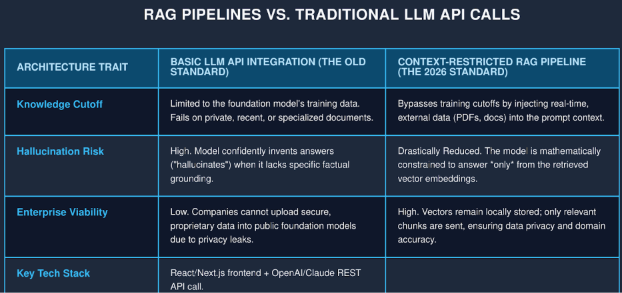
Figure 1. Why hiring managers in 2026 are looking for RAG architecture over simple API wrappers in student portfolios.
What is RAG? The Core Concept Explained
Retrieval-Augmented Generation (RAG) is a highly specific architectural framework designed to solve the two biggest problems with Large Language Models (LLMs): hallucinations and knowledge cutoffs.
Instead of asking the LLM to rely on its internal memory, a RAG pipeline intercepts the user's question, searches a private database (like a custom PDF resume or corporate document) for factual answers, and then forces the LLM to generate an answer based only on those retrieved facts.
The Architecture: How a Production-Grade RAG Chatbot Works
To understand the complexity and value of this architecture, let's look at a practical portfolio example: an AI-Powered Resume Chatbot. This application allows recruiters to chat with a PDF of your resume, asking questions like, "What did this candidate do during their IBM internship?"
To build this, a student must architect a full-stack, multi-stage pipeline:
Phase 1: Ingestion and Chunking A Python backend (often built with FastAPI) receives the static PDF document. Using libraries like pypdf or LangChain, the backend extracts the raw text. Because LLMs have limited context windows, the text must be sliced into small, overlapping semantic "chunks" so that context isn't lost at the page breaks.
Phase 2: Embeddings and Vector Storage This is where true AI engineering begins. The chunks of text are passed through an embedding model (such as those provided by Hugging Face). The model mathematically translates the text into a high-dimensional vector array. These vectors are then saved into a specialized Vector Database (like Pinecone, FAISS, or even a highly optimized custom JSON vector store).
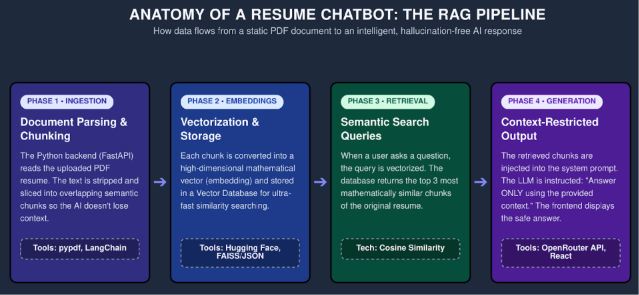
Figure 2. Step-by-step data flow of a production-grade Retrieval-Augmented Generation (RAG) architecture.
Phase 3: Semantic Retrieval When a recruiter types a question into the React/TypeScript frontend, the backend vectorizes the question using the exact same Hugging Face model. It then performs a mathematical calculation (usually Cosine Similarity) against the Vector Database to find the top three chunks of text that are most mathematically similar to the recruiter's question.
Phase 4: Context-Restricted Generation The pipeline retrieves those three highly relevant chunks of your resume and injects them into a strict system prompt. The prompt commands the LLM via an API (like OpenRouter): "You are an assistant. Answer the user's question ONLY using the provided context chunks. If the answer is not in the context, say you do not know."
The result? An intelligent, conversational response that is 100% grounded in your actual resume, with zero risk of hallucination.
Why Hiring Managers Love This Tech Stack
When you build a full RAG pipeline, you are signaling to employers that you understand enterprise-grade AI deployment.
Enterprise companies cannot upload their highly secure, proprietary data into public ChatGPT models due to massive data privacy concerns. RAG architectures solve this by keeping the vector database local and secure, only sending small, highly relevant chunks of data to the LLM for formatting.
Conclusion: Elevating Your Developer Identity
Building a robust RAG application—utilizing React, Vite, Tailwind CSS, Python, FastAPI, and Hugging Face embeddings—proves you can handle full-stack orchestration, complex data pipelines, and prompt engineering. As AI continues to evolve, the engineers who get hired will not be the ones who just know how to call an API; they will be the ones who know how to control, restrict, and ground the AI using sophisticated retrieval architectures.