Telegram’s temporary ban in India has sparked a fresh debate around exam security, digital access and the role of messaging platforms in the country. The government has reportedly blocked access to Telegram until June 22, 2026, after concerns were raised that the platform was being used to sell leaked NEET (UG) 2026 re-examination papers.
The decision has now drawn a strong reaction from Telegram founder and CEO Pavel Durov. In posts shared on X, Durov criticised the move and argued that the ban affects millions of regular users who had nothing to do with the alleged paper leak. He also made serious claims involving Reliance and WhatsApp, suggesting that the issue may be linked not only to exam-related concerns but also to competition in the messaging space.
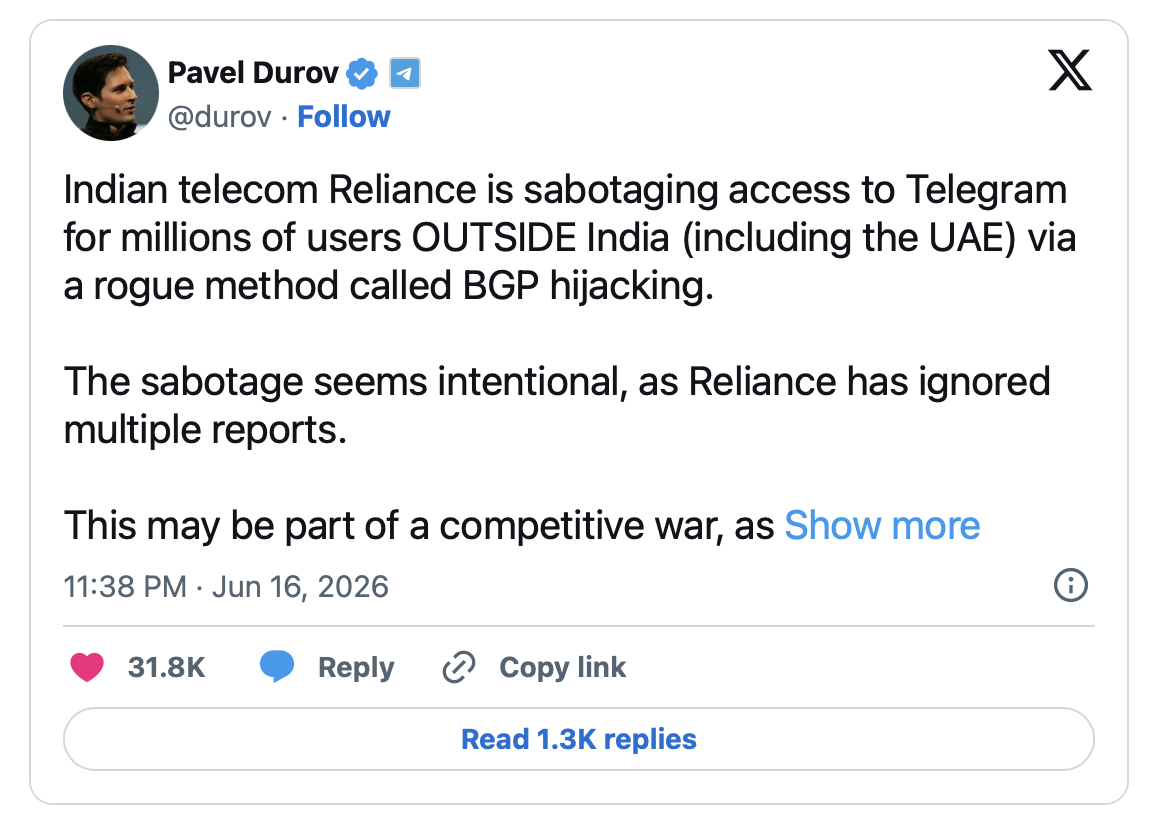
According to Durov, Telegram access was being disrupted for some users even outside India. He claimed that Reliance was interfering with Telegram traffic through a method known as BGP hijacking. In simple terms, BGP hijacking is a technical routing issue where internet traffic can be redirected or disrupted. Durov’s allegation has added another layer to the matter, especially because Telegram has a large user base in India and is widely used for personal chats, study groups, public channels, creator communities and business communication.
Durov also pointed to Reliance’s links with Meta, the parent company of WhatsApp. He wrote that he would not be surprised if Reliance or WhatsApp were also behind the recent lobbying effort to ban Telegram in India. These are serious claims, and they remain allegations made by Durov. Still, his comments have brought attention to the wider competition between messaging platforms in a country where millions depend on such apps daily.
In another post, Durov said the ban “punishes” more than 150 million ordinary Telegram users in India instead of targeting those who leaked or sold the exam material. He also claimed that the restriction had not stopped the spread of the leaked content and that such material had simply moved to other apps.
Why was Telegram banned in India?
The temporary ban has been linked to the alleged circulation and sale of NEET (UG) 2026 re-examination papers. The re-examination is scheduled for June 21, and authorities reportedly found that some cheating networks were using Telegram channels to target students appearing for the test.
Several channels were allegedly selling exam papers and charging students amounts ranging from a few thousand rupees to several lakhs. Given the scale and importance of NEET, such allegations naturally created concern. For lakhs of students and their families, the exam is not just another test. It is tied to years of preparation, financial pressure and hopes of entering the medical profession.
The ban was reportedly recommended by the National Testing Agency and enforced by the Ministry of Electronics and Information Technology under Section 69A of the Information Technology Act, 2000.
From the government’s side, the move appears to be aimed at stopping the spread of leaked exam material and protecting the credibility of the re-examination. However, the action has also raised a difficult question. Does blocking an entire app stop the people behind such activities, or does it mainly inconvenience regular users?
That is the point Durov has tried to make. His argument is that those involved in illegal activity can quickly shift to another platform, while genuine users lose access to their communities, groups and conversations.
For many Indians, Telegram is more than a simple messaging app. Students use it to follow coaching channels, collect notes, attend doubt-solving groups and receive exam updates. Creators use it to stay connected with their audience. News publishers use it to share alerts. Small businesses use it for customer groups. Many people also use it for family chats, office updates and community discussions.
This is why the ban has affected a large number of people who may have no link to the alleged leak. At the same time, the misuse of digital platforms for selling exam material cannot be ignored. The challenge for authorities is to act against those responsible without making millions of genuine users feel like collateral damage.
As Telegram remains unavailable temporarily, many users are now looking for other messaging apps. No alternative offers exactly the same experience as Telegram, but some apps can help users stay connected until access returns.
Here are five alternatives users can consider
Signal
Signal is one of the most trusted messaging apps for people who care about privacy. It is run by a non-profit organisation and offers end-to-end encryption for messages, calls, group chats and file transfers by default.
The app does not depend on ads, does not use trackers and collects very limited user data. It supports disappearing messages, voice calls, video calls, media sharing and group conversations. On Android, it can also be used as the default SMS app.
Signal is especially useful for users who used Telegram mostly for private chats with friends, family or small groups. Its interface is simple, and it does not try to overload users with too many features.
However, Signal may not feel like a complete Telegram replacement for everyone. Telegram is known for its large public channels, bots, broadcast groups and community features. Signal is more focused on private communication. So, users who depended on Telegram for big channels or study communities may find Signal slightly limited.
Still, for secure one-to-one chats and trusted group conversations, Signal remains one of the strongest options.
Session
Session is another privacy-focused app, but it goes a step further by not asking for a phone number or email address during sign-up. This makes it useful for people who want to communicate without linking their identity to a mobile number.

The app works on a decentralised network rather than depending only on central servers. Messages are end-to-end encrypted, and users can send texts, voice messages and files. It also supports group chats.
Session is a good option for users who want a smaller digital footprint. It is not as mainstream as WhatsApp, Telegram or Signal, so some users may need time to get familiar with it. Also, because it focuses strongly on privacy, it may not offer the same smoothness or wide adoption that people expect from daily messaging apps.
Even then, Session stands out for users who value anonymity and privacy more than convenience.
Arattai
Arattai is an Indian messaging app built by Zoho, one of the country’s well-known software companies. For users who want to try a homegrown alternative during Telegram’s temporary ban, Arattai is worth considering.
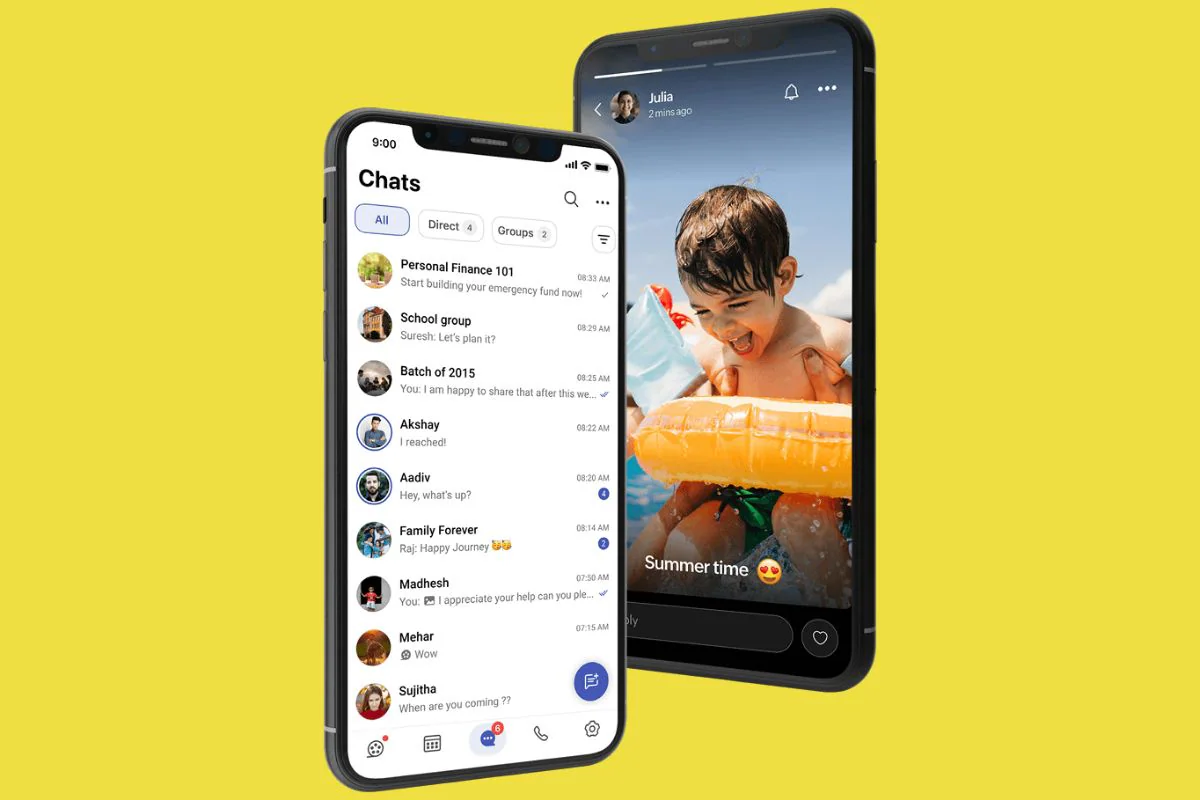
The app offers text messages, voice messages, audio calls, video calls, stories, channels and group chats. It also provides end-to-end encryption for direct messages and calls. Users can also import WhatsApp group chats, which may make switching easier.
Arattai’s biggest appeal is that it is built in India and feels familiar to users who want a local option. It also supports use across multiple devices and is free to use.
However, Telegram has built a very large ecosystem over the years, especially around channels, bots and public communities. Arattai may still take time to match that scale. But for regular messaging, calls and groups, it can serve as a practical alternative.
X messenger
X, formerly Twitter, also has a direct messaging feature. Many users already have the app installed, so it can work as a temporary option for informal conversations.
Users can send text messages, photos, videos, voice notes and GIFs. They can also create group chats. For people who are already active on X, this is convenient because they do not need to download a new app.
However, X messenger is not a dedicated messaging platform like Telegram. It does not offer the same channel system, large community structure or file-sharing experience. It also does not provide end-to-end encryption by default for all chats, so it is not ideal for sensitive conversations.
It can be useful for casual updates and quick chats, but it should be seen as a stopgap rather than a serious Telegram replacement.
Bitchat
Bitchat is different from the other apps on this list because it can work without the internet. It uses Bluetooth mesh networking, where nearby devices help pass messages from one device to another.
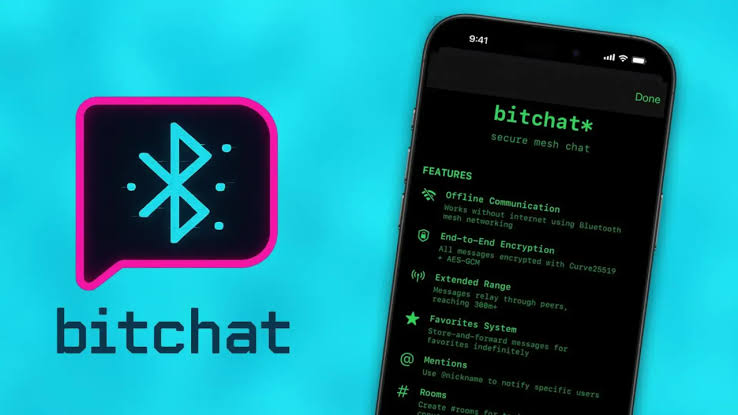
The app does not need a phone number, central server or internet connection. Each device on the network works as both a sender and a relay point. This makes it useful during internet shutdowns, network failures or situations where regular connectivity is not available.
Bitchat is not a mainstream replacement for Telegram. It is not meant for large channels, media-heavy groups or everyday social communication. But it is useful in specific situations where people need to stay connected locally without relying on internet infrastructure.
The bigger debate
The Telegram ban has once again shown how difficult it is to control illegal activity on digital platforms without affecting regular users. There is no doubt that exam paper leaks are serious and must be investigated firmly. Students deserve a fair examination process, and those responsible for leaks should face strict action.
At the same time, banning an entire messaging platform creates problems for ordinary users. If those involved in selling leaked papers can simply move to another app, then the real solution may lie in tracking the networks, identifying the insiders, following the money trail and removing specific illegal channels quickly.
For now, Telegram users in India may have to depend on other apps until access is restored. Signal and Session are better for privacy, Arattai is a local Indian option, X can help with casual chats, and Bitchat is useful when internet access itself becomes unreliable.
Durov’s reaction has made the issue bigger than just one app ban. It has turned into a discussion about platform responsibility, government action, user freedom and competition in India’s messaging market.
Until June 22, 2026, users will be watching closely to see whether Telegram access returns as expected and whether the controversy leads to a larger conversation on how India handles digital platforms in sensitive situations.