In a critical reminder of the vulnerabilities inherent in software supply chains, Meta has
confirmed a security breach involving its GitHub repositories. Rather than exploiting a
zero-day vulnerability in Meta's core infrastructure, external threat actors utilized stolen
employee login credentials to access externally hosted repositories. The incident exposed
proprietary software source code, business data, and the personal information of
approximately 1,500 employees. This report dissects the anatomy of the attack, the
nature of the compromised data, and the strategic remediation efforts implemented by Meta to harden its development pipelines.
Introduction
For modern enterprise engineering teams, the software development life cycle (SDLC) is heavily distributed across cloud-hosted version control systems like GitHub. While these platforms enable rapid collaboration, they also extend the corporate attack surface. Securing these environments requires more than just network perimeters; it demands rigorous identity
management and continuous code governance. The recent Meta GitHub breach illustrates a
growing industry trend: adversaries bypassing hardened internal networks by exploiting
credential theft to target externally hosted development repositories.
Root Cause and Incident Scope
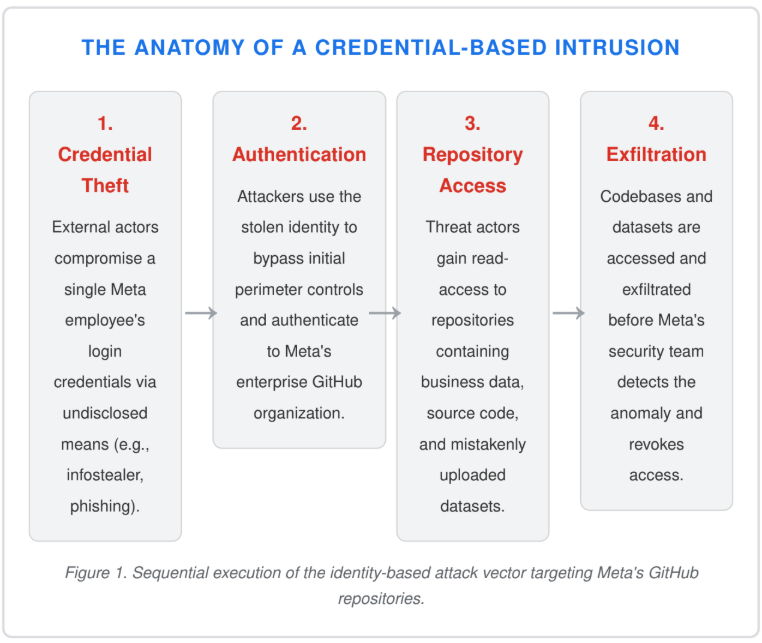
The core catalyst for this incident was compromised identity. Meta confirmed that the intrusion
was not the result of a vulnerability within any Meta product, nor were Meta's internal production
systems and networks breached. The incident was isolated entirely to business data and code
hosted on GitHub.
According to preliminary investigations conducted jointly by Meta and GitHub's security teams,
the threat actors were not executing a highly targeted cyber-espionage campaign explicitly aimed at Meta. Instead, it was an opportunistic exploitation of an employee's stolen credentials.
The PII contamination problem
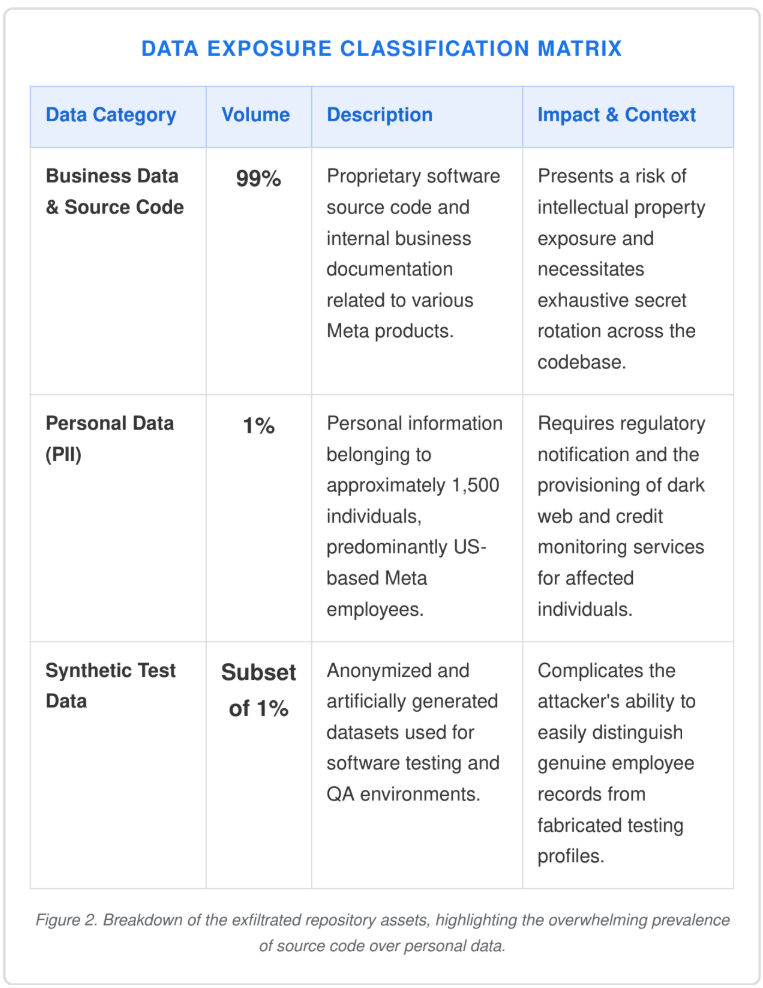
While the vast majority of the compromised data was source code, the exposure of personal
employee data highlights a critical operational vulnerability: the accidental contamination of code repositories with sensitive data. Meta acknowledged that the presence of this personal data within GitHub was a direct violation of their internal security policies. Developers often utilize datasets to run local tests; when these datasets contain genuine, rather than synthetic,
information and are inadvertently committed to version control, it creates a lingering privacy risk.
Engineering Preventive Controls and Best Practices
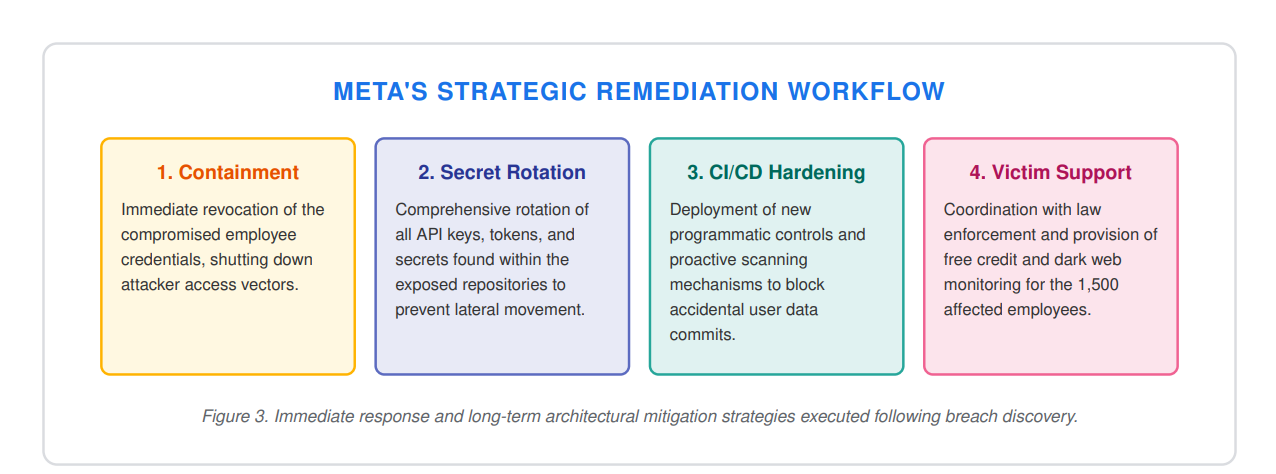
To prevent recurrence, organizations must assume that developer credentials will eventually be
targeted and compromised. Meta's response involves hardening product security and
implementing strict, automated guardrails. The following best practices, aligned with Meta's
remediation steps, are essential for securing enterprise GitHub environments:
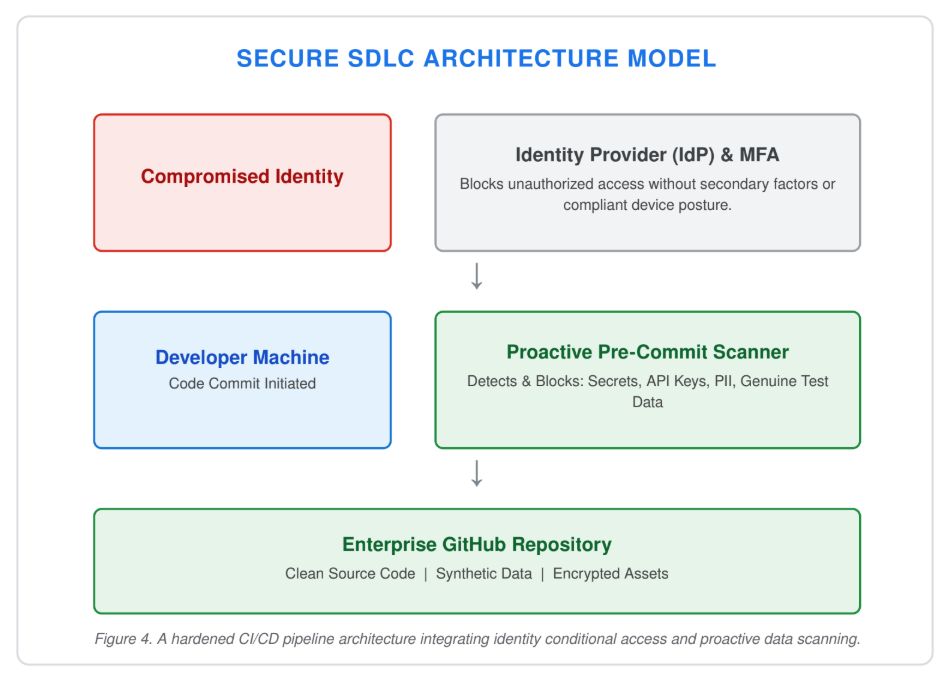
Proactive Pre-Commit Scanning: Implement continuous scanning controls (e.g.,
Git hooks or platform-native scanners) to automatically detect and block the upload
of hardcoded secrets, API keys, and accidentally included user data (PII) before the
commit is accepted by the remote repository.
Enforce Synthetic Test Data: Strict policy enforcement and tooling should ensure
that developers only utilize fully synthetic, auto-generated data for testing and QA,
entirely eliminating the risk of genuine PII contamination in source control.
Zero-Trust Identity Verification: Mandate robust Multi-Factor Authentication (MFA)
and conditional access policies (evaluating device health and IP reputation) for all
repository access, ensuring a stolen password alone is insufficient for intrusion.
Automated Secret Rotation: In the event of source code exposure, having an
automated architecture to instantly rotate compromised secrets is critical to
preventing adversaries from leveraging exposed tokens to attack production
environments.
Final Verdict
The Meta GitHub breach serves as a stark case study in the modern threat landscape. Attackers are increasingly pivoting away from complex infrastructure exploits in favor of identity-based attacks targeting third-party SaaS and code hosting platforms. By deploying rigorous proactive scanning, enforcing synthetic data policies, and maintaining rapid secret rotation capabilities, enterprise engineering teams can mitigate the impact of compromised developer credentials and protect both proprietary code and user privacy.
Expert FAQs
Were Meta's core products or internal systems hacked?
No. Meta confirmed that its internal systems and production networks remained entirely secure.
The hackers only accessed business data hosted externally on the GitHub code management
platform.
How did the attackers gain access?
An outside group used a single employee's stolen login credentials to authenticate and gain
access to the repositories.
What is Meta doing to prevent this from happening again?
Meta has rotated all exposed secrets, implemented new programmatic controls to prevent user
data from being stored in GitHub, and deployed proactive scanning controls to detect accidental
data uploads. They are also collaborating with GitHub on advanced repository protection
measures.