Mass hiring 2026 is not dead. It is changing.
For years, India's fresher job market was largely driven by large IT companies hiring thousands of graduates, training them and placing them across technology, business-support and operations projects. In 2026, that model still exists, but the expectations are changing. Companies are increasingly looking for freshers who understand AI, cloud, data, cybersecurity, software development and modern technology tools, rather than candidates who only have a degree and basic technical knowledge.
The opportunity is still significant, but the market is becoming more selective. Large IT services companies continue to create entry-level opportunities, while product companies, consulting firms and GCCs are also hiring graduates for specialised roles. This means that students searching for mass hiring companies in 2026 now have more options, but they also need to understand which roles match their skills.
Mass Hiring 2026: What Is Actually Happening?
The fresher job market in 2026 can broadly be divided into two categories. The first is high-volume hiring, where IT services, consulting and business-process companies recruit graduates for entry-level technology, support, analyst and operations roles. These programmes generally have broader eligibility requirements and may be open to graduates from several engineering and non-engineering backgrounds.
The second category is skill-focused hiring. Product companies, global technology companies and GCCs generally hire fewer candidates for these positions but look for stronger technical fundamentals, relevant projects, internships and specialised skills. Candidates applying for software engineering, cybersecurity, cloud, AI or data roles may therefore face a more technical selection process.
This distinction is important because students searching for mass hiring jobs 2026 should not restrict themselves only to traditional IT service companies. Current fresher opportunities are spread across software engineering, cybersecurity, data, business analysis, cloud, testing, core engineering, internships and apprenticeships.
Which Companies Are Hiring Freshers in 2026?
Several companies are currently appearing in fresher hiring trackers across technology, consulting, engineering and other sectors. Current listings include names such as Microsoft, NVIDIA, PwC, Deloitte, Cognizant, Hitachi Energy, S&P Global, Johnson Controls and Micron, among others.
These companies represent very different career paths. A software engineering role at a technology company can require strong programming and problem-solving skills, while a cybersecurity position may focus more heavily on networking, security fundamentals and cloud security. Similarly, consulting and business roles may place greater importance on analytical ability, communication and business understanding.
This is why students should not judge an opportunity only by the company name. The role, eligibility criteria, technology stack, location, compensation and learning potential should all be considered before applying.
TCS, Infosys, Cognizant, HCLTech and Wipro Still Matter
The traditional mass recruiters continue to be important for freshers because they maintain dedicated graduate and early-career hiring channels. TCS, Infosys, Cognizant, HCLTech and Wipro continue to operate programmes designed to bring students and recent graduates into their organisations.
TCS maintains dedicated entry-level and internship opportunities through its India careers portal, while Infosys continues to highlight graduate opportunities and AI-focused training. Cognizant has dedicated student and new-graduate programmes, including its GenC pathway for entry-level talent. HCLTech and Wipro also maintain early-career opportunities for graduates and young professionals.
However, students should understand that having a fresher programme does not mean that a particular position will remain open throughout the year. Hiring windows can open and close quickly, and eligibility requirements can differ between programmes. Candidates should therefore check the official company career portal before applying instead of relying only on old social-media posts or reposted job advertisements.
Product Companies Are Hiring Too — But the Bar Is Higher
One of the biggest mistakes freshers make is assuming that mass hiring only means companies such as TCS, Infosys, Wipro or Cognizant. The current fresher market also includes opportunities from technology companies, consulting firms, GCCs and specialised businesses.
The major difference is usually the screening process. A large IT services company may evaluate programming fundamentals, aptitude, communication and basic technical knowledge for some entry-level positions. A product or specialised technology company may expect stronger data structures and algorithms, programming fundamentals, system knowledge, cloud skills, projects or domain-specific expertise.
This does not mean that students from average colleges cannot compete. It simply means that the application strategy needs to be different. Instead of sending the same resume to every company, candidates should create targeted resumes based on the type of role they want and clearly demonstrate the skills required for that position.
What Skills Are Companies Looking for in 2026?
The biggest change in the 2026 fresher market is the movement from degree-first hiring towards skill-first hiring. A degree remains important, but companies increasingly want candidates who can demonstrate that they understand the tools and technologies used in real-world work.
AI is one of the clearest examples of this shift. AI-related hiring has been growing faster than overall IT recruitment, showing how strongly artificial intelligence is becoming part of India's technology employment market. However, this does not mean every fresher needs to become an AI researcher.
For software developers, a practical combination could include programming, data structures and algorithms, SQL, Git, REST APIs, databases, cloud fundamentals and AI-assisted development. Candidates interested in data roles can add Python, statistics, Excel, Power BI and machine learning fundamentals. Those targeting cybersecurity can focus on networking, Linux, security fundamentals, scripting and cloud security.
The important point is not to collect dozens of certificates. A candidate should be able to demonstrate useful skills through projects, internships, practical work and the ability to explain what they have built.
The New Definition of a "Mass Hiring" Candidate
A few years ago, a fresher could sometimes compete primarily through their degree, academic percentage and aptitude-test performance. Those factors still matter, but they are no longer enough for many technology roles.
A stronger candidate can explain what they have built, why they selected a particular technology, how their application works and how they solved problems during development. For example, writing "developed an AI-based application" on a resume is not particularly impressive by itself. Being able to explain the architecture, database, authentication system, APIs, challenges and improvements is much more valuable during an interview.
This is why a simple project that a student genuinely understands can sometimes be more useful than an extremely complicated project copied from GitHub. Recruiters and interviewers are increasingly interested in whether the candidate actually understands their claimed skills.
How to Apply for Mass Hiring Jobs in 2026
The best way to approach mass hiring is to treat the job search like a funnel. Start by finding legitimate openings through official company career pages, college placement portals and reputable fresher-job platforms. Once you find a position, carefully check the graduation year, degree, branch, percentage requirements, backlog conditions, experience requirements and location before applying.
The next step is to match your resume with the actual position. If a job requires Java, SQL, REST APIs and Git, those skills should be clearly visible in your resume if you genuinely have them. If you are applying for a cybersecurity position, your resume should demonstrate cybersecurity-related knowledge or projects instead of focusing entirely on unrelated frontend development.
Candidates should also apply early when a legitimate vacancy becomes available. Fresher positions can receive a large number of applications, and some openings may close once sufficient applications have been received.
After applying, prepare according to the company's selection process. Depending on the organisation and role, the process can include aptitude testing, coding or technical assessments, technical interviews, managerial discussions and HR rounds. The exact process varies from company to company, so candidates should research the specific hiring pattern instead of preparing for every company in exactly the same way.
Don't Ignore Internships and Apprenticeships
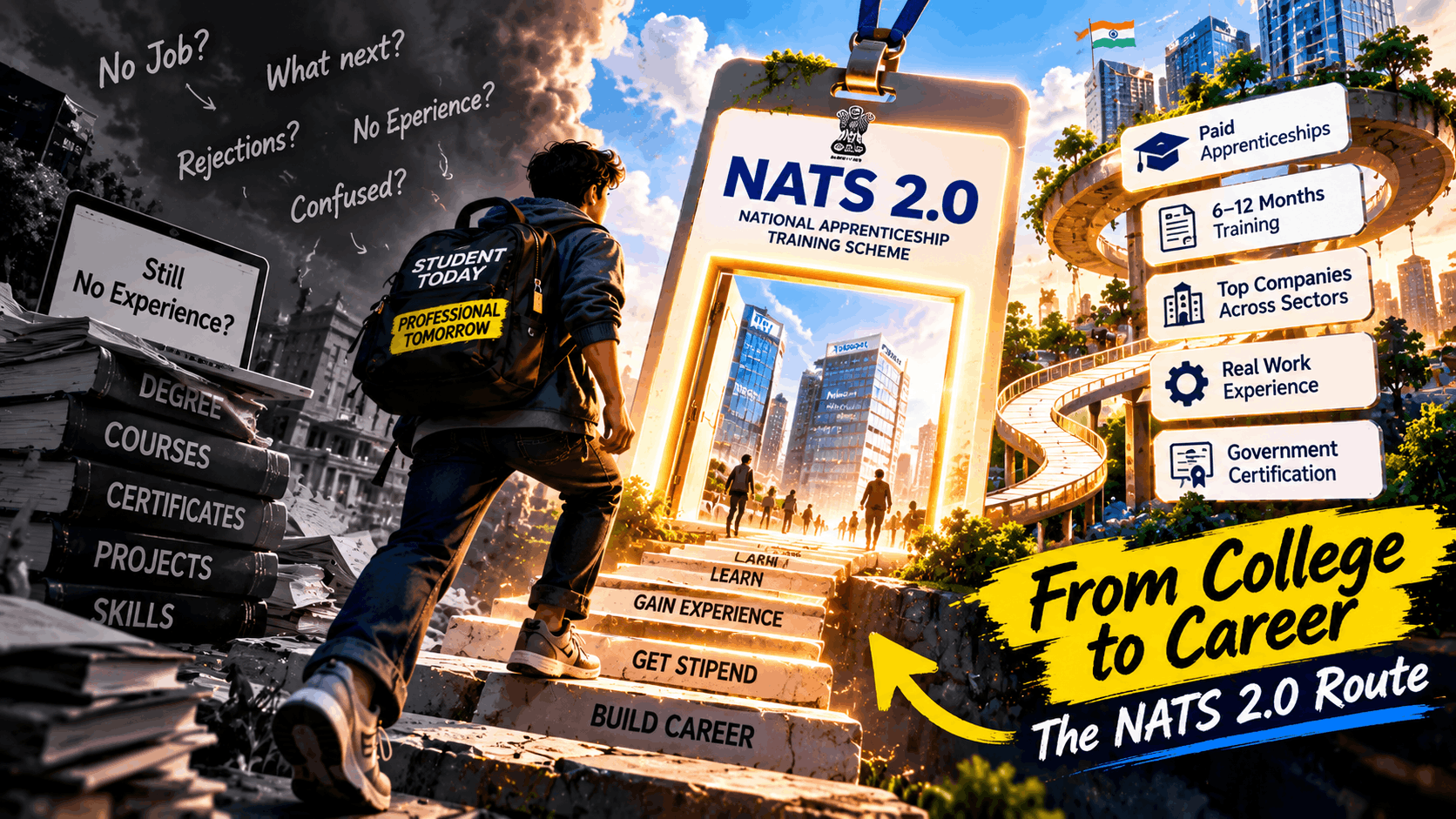
Another common mistake is searching only for full-time fresher jobs in 2026. Internships and apprenticeships can provide another route into the professional market, especially when direct full-time hiring is competitive.
Current fresher hiring trackers include internships and apprenticeship opportunities across companies and industries. These positions can provide students with practical experience, exposure to professional workflows and an opportunity to build a stronger resume before applying for full-time positions.
For many students, an internship should not be viewed simply as a temporary job. A good internship can become a bridge between college and full-time employment, particularly when the candidate gets the opportunity to work on real projects and demonstrate measurable contributions.
What Salary Can Freshers Expect in 2026?
There is no single salary figure for mass hiring in 2026. Compensation varies considerably depending on the company, role, location, technology, hiring programme and candidate's skill level.
Some entry-level IT service roles may offer packages around the lower-to-mid single-digit LPA range, while specialised technology and product roles can offer significantly higher compensation. This is why students should not compare all fresher jobs only by their starting salary.
A role offering slightly lower initial compensation but providing strong exposure to software engineering, cloud, AI, data or cybersecurity can potentially create better opportunities after two or three years than a higher-paying position with limited technical growth.
Your first job should therefore be evaluated not only by the salary you receive today, but also by the skills, experience, brand value and career mobility it can provide tomorrow.
Is Mass Hiring 2026 Actually Good News for Freshers?
Yes, but there is an important warning.
The fresher market is still generating opportunities, but the old assumption that companies will automatically absorb very large numbers of graduates is becoming less reliable. AI is changing how technology companies operate, and organisations are increasingly focused on productivity, specialised skills and business outcomes.
At the same time, early-career hiring has not disappeared. Large companies continue to maintain graduate programmes, internships and entry-level recruitment channels. The opportunity is therefore still present, but the selection process is becoming more competitive.
The market is not disappearing.
The filter is getting stronger.
What Should Freshers Do Right Now?
If you are graduating in 2026 or preparing for the 2027 hiring cycle, do not wait for one massive recruitment drive. Build a continuous job-search pipeline that includes large IT services companies, product companies, GCCs, consulting firms, startups, internships and apprenticeships.
Keep a strong general resume, but customise it when the role demands specific technical skills. Build at least one project that you can explain deeply instead of collecting several projects that you barely understand. Practise DSA and problem-solving if you are targeting software engineering roles, learn SQL regardless of your preferred technology stack and understand how AI tools are changing modern development.
Most importantly, track your applications. Maintain a simple record of the company, role, date applied, eligibility, assessment status, interview stage and final result. This prevents your job search from becoming random and helps you understand where your applications are actually succeeding or failing.
The Bigger Shift Behind Mass Hiring 2026
The Indian fresher market is gradually moving from "hire thousands and train them" towards "find large numbers of trainable candidates who already demonstrate useful skills."
That is a subtle but important change. A degree still matters, college placements still matter, aptitude tests still matter and large IT recruiters still matter. But candidates who combine these advantages with projects, internships, communication, problem-solving and modern technical skills are increasingly better positioned.
This is why mass hiring 2026 should be understood differently. There may be thousands of opportunities, but they are not necessarily sitting inside one giant recruitment drive. They are distributed across IT services, product companies, GCCs, consulting, AI, cloud, cybersecurity, data, core engineering, internships and apprenticeships.
Students who identify these opportunities early, understand the eligibility criteria and prepare specifically for the role will have a much better chance of converting applications into interviews and interviews into offers.
Mass Hiring 2026: Frequently Asked Questions
Which companies are hiring freshers in 2026?
Current fresher opportunities can be found across companies such as Microsoft, NVIDIA, Cognizant, PwC, Deloitte, Hitachi Energy, S&P Global, Johnson Controls and Micron, while major IT companies such as TCS, Infosys, Cognizant, HCLTech and Wipro continue to operate early-career hiring channels.
Is TCS hiring freshers in 2026?
TCS maintains dedicated entry-level and internship opportunities through its India careers portal. Students should check the official TCS careers page for the latest active programmes and eligibility requirements because hiring windows can change.
Is Infosys hiring freshers in 2026?
Infosys continues to operate graduate and early-career programmes and provides training opportunities for graduates. Candidates should check the official Infosys careers portal for currently available positions.
Is Cognizant hiring freshers in 2026?
Cognizant maintains dedicated student and new-graduate opportunities, including its GenC programme for entry-level candidates. Eligibility and hiring schedules can vary between programmes.
What skills should freshers learn for jobs in 2026?
For software roles, focus on programming, DSA, SQL, Git, APIs, databases and cloud fundamentals. AI literacy is also becoming increasingly useful as companies integrate AI into software development and business processes.
Can non-CS students apply for IT mass hiring?
Yes, depending on the eligibility requirements of the particular position. Fresher opportunities are available across areas such as IT support, cybersecurity, business analysis, operations, engineering and other technical roles. Students should always check the exact degree and branch requirements before applying.
Are internships useful for getting a full-time job?
Yes. Internships can provide practical experience, project exposure and professional skills that are difficult to develop through classroom learning alone. They can also strengthen a candidate's resume when applying for full-time fresher positions.
Should freshers apply to every mass hiring job?
No. Apply broadly, but do not apply blindly. Prioritise positions where your education, skills, projects and career goals match the requirements. A targeted application with a relevant resume is generally more useful than sending the same resume to every vacancy you find.
Final Takeaway
Mass hiring 2026 is still happening—but the definition of mass hiring has changed.
The opportunity is no longer limited to a few large IT companies. Freshers can find opportunities across software development, AI, cloud, cybersecurity, data, consulting, engineering, internships and apprenticeships.
The market is competitive, and AI is changing the kind of work companies need. But this also creates opportunities for students who prepare according to the market that exists today rather than waiting for the hiring environment of previous years to return.
Don't wait for mass hiring to find you. Build a profile that companies can hire.
Job openings, eligibility criteria, hiring numbers and application windows can change quickly. Always verify the latest information on the employer's official career portal before applying. Never pay an individual or unofficial recruiter for a job application or selection.