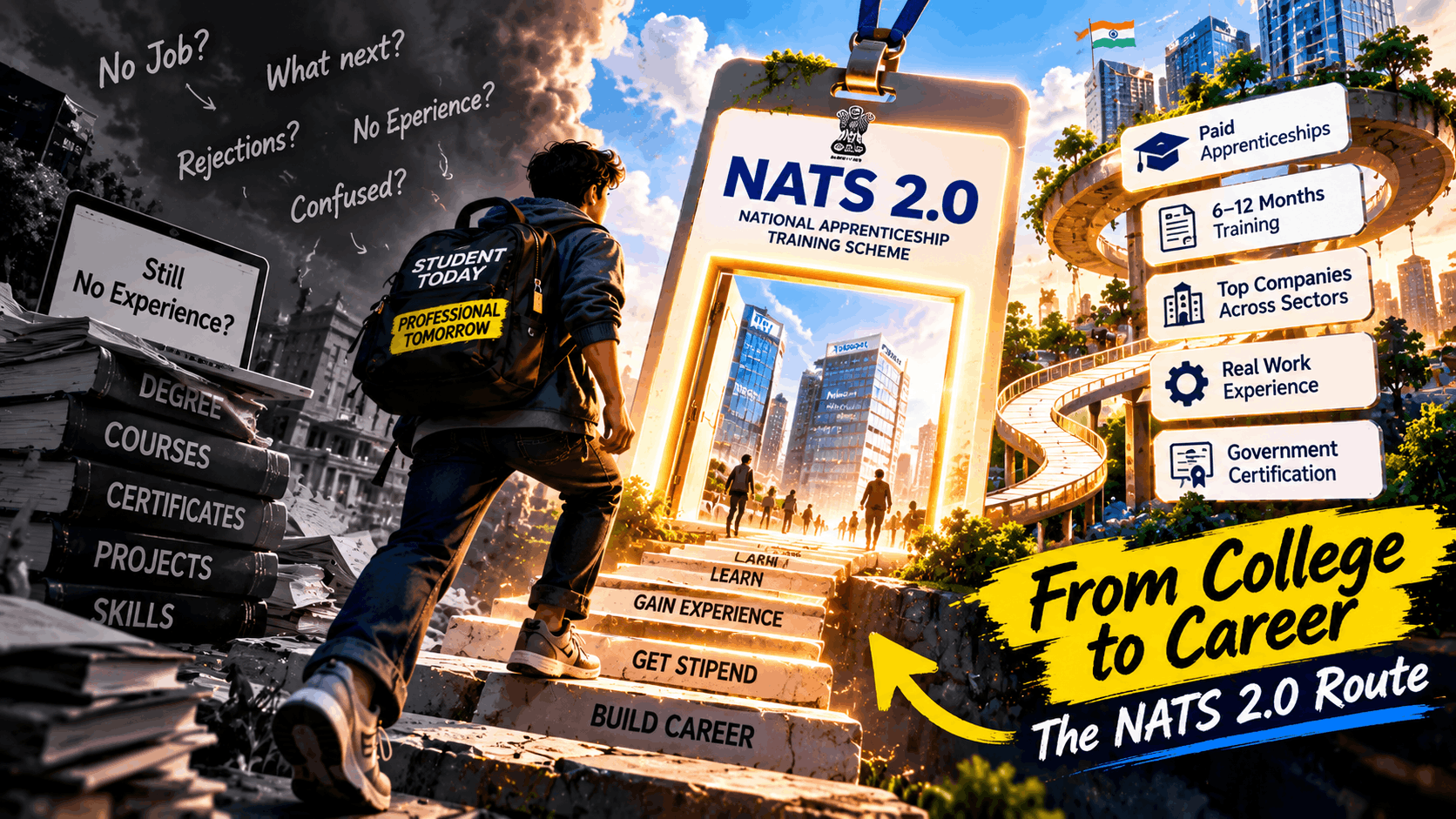
For many students, the biggest challenge before getting a first job is not collecting another certificate—it is gaining real industry experience. Recruiters increasingly look for candidates who understand teamwork, deadlines and professional workflows, but students often get limited exposure to these before graduation.
The Prime Minister Internship Scheme (PMIS) is trying to bridge this gap. In 2026, the government expanded the scheme to include eligible final-year undergraduate and postgraduate students aged 18–25. Selected interns can receive a minimum ₹9,000 monthly financial assistance, along with opportunities to gain practical experience in participating companies.
What Changed in PMIS 2026?
The biggest change is the inclusion of final-year students who are still pursuing their degrees. This means eligible students no longer necessarily have to wait until graduation before gaining structured industry exposure.
However, final-year students need a No Objection Certificate (NOC) from their college or university confirming that the internship will not interfere with their academic requirements. The NOC can be issued by authorised officials such as the Principal, Dean, Head of Department or Training and Placement Officer.
What Does the Scheme Offer?
PMIS focuses on practical workplace exposure rather than simply completing an online internship. Under the revised framework, selected interns receive ₹9,000 per month, along with a one-time ₹6,000 grant for incidental expenses. The scheme also provides insurance coverage under government-backed insurance programmes.
The programme covers multiple sectors and locations, making it relevant to students from different academic backgrounds. Earlier rounds included opportunities for graduates from areas such as BCA, BBA, B.Com, B.Sc and BA, alongside engineering, diploma and ITI candidates.
Why Should Students Care?
The real value of PMIS is experience before graduation. Working inside an organisation can teach students things that courses and college projects cannot fully replicate—professional communication, team collaboration, deadlines, business processes and practical problem-solving.
The scheme is also becoming significant in scale. Government data shows that 7.3 lakh candidates created profiles across the first two rounds, with 1.65 lakh internship offers registered. The government has set a long-term target of creating one crore internship opportunities over five years.
There are also indications that strong performance can lead to employment. The Ministry of Corporate Affairs reported instances of PMIS interns receiving full-time job offers from participating companies. This is not a placement guarantee, but it shows that an internship can become a potential entry point into a longer-term career.
How Can Students Apply?
Students can explore opportunities through the official PM Internship Scheme portal. Final-year students should first arrange their college NOC, complete their profile and check the eligibility requirements for individual vacancies.
The most important strategy is to choose roles based on your career goal. A computer science student should prioritise technology, software, data or related roles rather than applying simply because an internship offers ₹9,000. Similarly, commerce, management and science students should target opportunities that add relevant experience to their resumes.
Prime Minister Internship Scheme — Official Portal
PMIS vs a Regular Internship
A private internship can still be the better choice if it provides strong mentorship, meaningful projects or experience directly related to your target career. PMIS, however, provides another government-backed route to structured industry exposure, financial assistance and experience across multiple sectors.
For a final-year student whose resume currently contains mainly projects, coursework and certificates, meaningful workplace experience can become a strong differentiator during placements and interviews.
What Should Students Do Now?
If you are a final-year student between 18 and 25, check the latest PMIS eligibility requirements and speak with your college's placement or academic office about the NOC. Then use the official portal to identify opportunities that match your degree and career plans.
Don't treat PMIS simply as a ₹9,000-per-month opportunity. Treat it as a chance to build experience you can explain in an interview—the projects you worked on, tools you used, problems you solved and results you contributed to.
The bigger opportunity is simple: you don't always have to wait until graduation to start building your professional career.