In a stunning showcase of cross-industry technology transfer, Tesla unveiled the production-intent second-generation Roadster in Texas
Introduction: The Convergence of EV and Aerospace Engineering
Automotive design cycles rarely witness a radical paradigm shift unless driven by cross-industry innovation. For nearly nine years since its initial 2017 concept unveiling
The production-intent reveal in Texas, however, signaled a decisive pivot: a high-performance showcase uniting the collective engineering might of Tesla, xAI, and SpaceX
Technical Overview: SpaceX Thrusters and Active Suction Physics
The demonstration proved that the new Roadster relies on active aerodynamic and pneumatic systems borrowed directly from aerospace engineering rather than standard automotive downforce.
1. Active Underbody Suction (2Gs of Downward Force)
Opening the presentation, the Roadster drove up a massive ramp and locked vertically onto a wall
"This car really sucks... It could suck the chrome off a trailer hitch. It could suck a tennis ball through a hose pipe
2. Cold Gas Thrusters and Attitude Control
Following the wall-climbing demonstration, the Roadster accelerated toward a C-shaped ramp, launched into the air, and performed a controlled barrel roll
Tesla Roadster SpaceX Thruster Integration Architecture
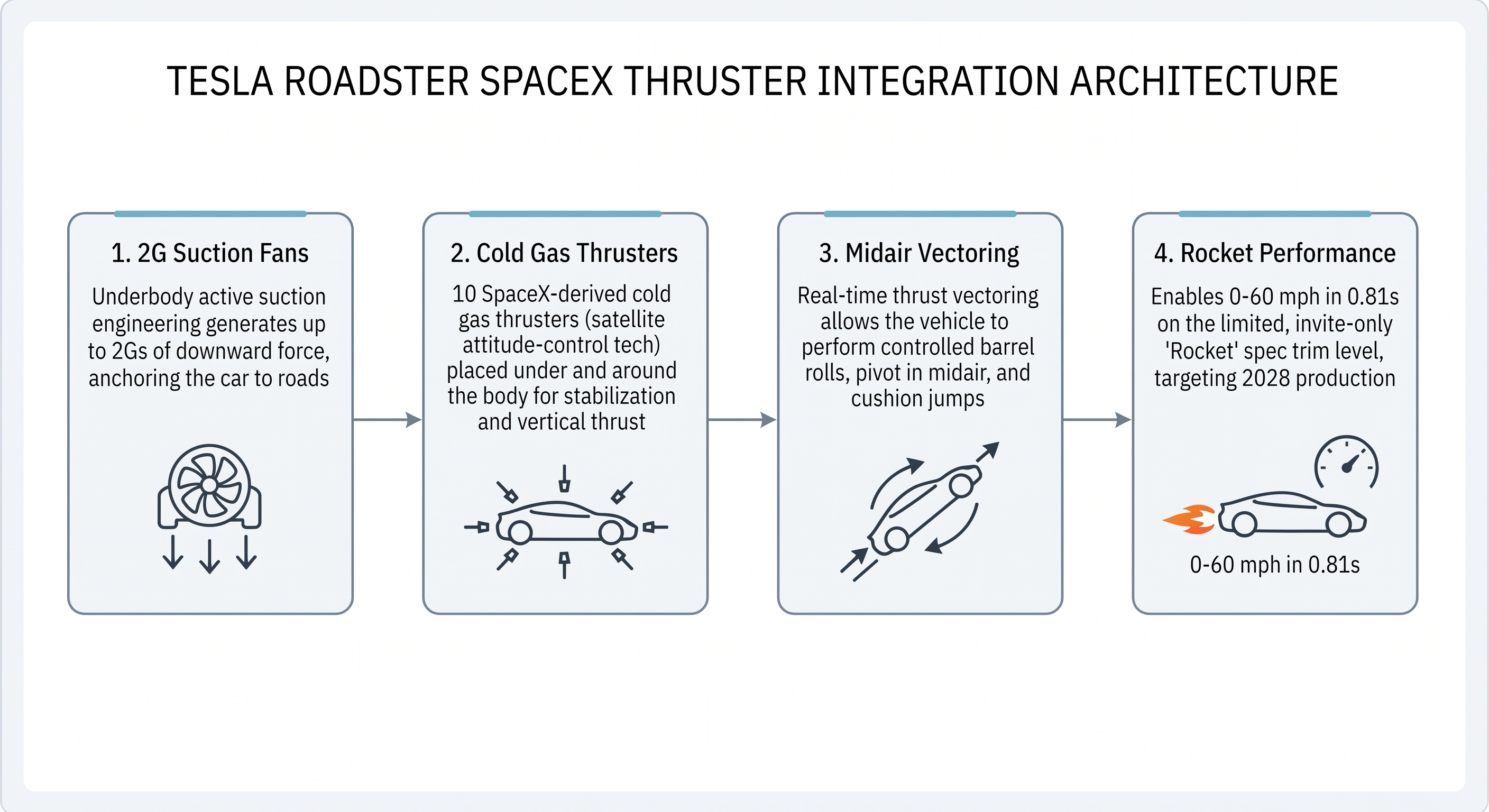
Figure 1. Operational mechanics of the SpaceX thruster and suction system on the 2028 Tesla Roadster.
Comparative Evolution: 2017 Concept vs. 2026 Production-Intent Reveal
The production-intent Roadster bears almost no visual or structural resemblance to the curvaceous, smooth-bodied concept vehicle shown in 2017
Technical Specification Matrix
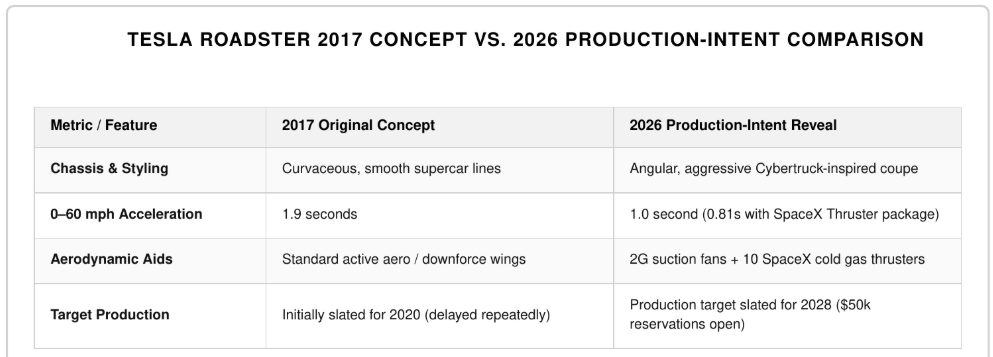
Figure 2. Comparative matrix highlighting the evolutionary leap from the 2017 Roadster concept to the 2026 SpaceX-integrated reveal.
Engineering Reality Check: Demo Mule vs. Street-Legal EV
Industry analysts and veteran automotive testers have raised valid skepticism regarding the functional viability of the demonstration vehicle.
The Opaque Cockpit: During the Texas reveal, the Roadster’s windows appeared entirely opaque, indicating the absence of a standard driving cockpit
Weight and Energy Trade-Offs: Long-range electric vehicles are heavily laden with hundreds of pounds of battery mass. Executing violent rotational aerial acrobatics while managing high-density battery packs presents extreme structural load challenges.
The Verdict: Experts deduce that the vehicle on stage was likely a stripped-down, remotely controlled engineering mule carrying just enough onboard battery to execute the choreographed demo
Performance Targets and the 2028 Production Roadmap
Aside from its cinematic airtime, Tesla's projected on-road performance metrics are staggering:
Lateral Acceleration: Claimed ability to corner at more than 2g of lateral acceleration
Sprint Timings: 0–60 mph in 1.0 second standard, dropping to 0.81 seconds with the SpaceX thruster package engaged
Trim Hierarchy: Musk announced three distinct trim levels, culminating in a limited-edition, invite-only "Rocket" spec not made available to the general public
Timeline and Pricing: Tesla has established an ambitious production target for 2028
Expert FAQs
Q: Are the SpaceX thrusters on the Roadster functionally identical to satellite hardware?
A: Yes. Tesla utilizes cold gas thruster technology derived directly from SpaceX satellite and spacecraft attitude-control systems to provide precise, compressed-air thrust vectors in midair
Q: Will the flying Roadster be street-legal for everyday consumers?
A: Highly unlikely
Q: What is the current status of reservations and production?
A: Tesla has officially opened reservations requiring a $50,000 deposit, with a targeted production rollout aiming for 2028 following multiple years of concept delays
Watch the official event coverage and analysis via
Electrified Cars & Tech Coverage Tesla Official Event Stream