Apple’s highly anticipated entry into the foldable smartphone market, the iPhone Duo, has officially launched, shifting the foldable form factor from a niche early-adopter luxury to a mainstream expectation. But the foundational question regarding any foldable device remains: How durable is the hinge?
To answer this, our hardware laboratory has engineered a custom automated testing rig—dubbed the "Fold-a-Phone"—designed to rigorously stress-test the mechanical endurance of the iPhone Duo against industry veterans like the Galaxy Z Fold 8.
The Engineering Methodology: Real-World Cadence vs. Speed Testing
While foldable phones are typically rated by manufacturers for 200,000 to 500,000 folds, laboratory testing methodologies vary wildly. A critical flaw in many automated stress tests is excessive speed; rapidly snapping a device open and closed hundreds of times a minute generates immense, artificial friction and heat that does not accurately represent natural human use.
To circumvent this, the Fold-a-Phone machine employs a deterministic 4-second folding cycle.
- 1 Second: Actuate to a fully open state.
- 1 Second: Static hold (simulating content viewing).
- 1 Second: Actuate to a fully closed state.
- 1 Second: Static hold.
This deliberate cadence equates to exactly 900 folds per hour. This speed is fast enough to yield actionable longevity data within weeks, yet slow enough to prevent unnatural thermal degradation of the OLED display layers and hinge magnetics.
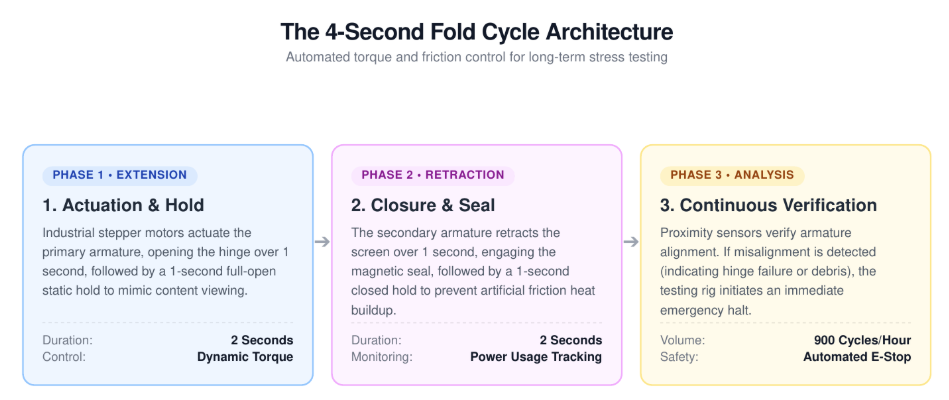
Figure 1. Sequential visualization of a single, highly controlled folding cycle used to test hinge durability.
Machine Architecture and Fail-Safes
The Fold-a-Phone rig is constructed using industrial-grade stepper motors to drive dual armatures with precise grace. Because foldable models vary significantly in dimensions and hinge resistance, standard clamping mechanisms risk applying undue structural stress to the phone's chassis.
To solve this, each tested device—including the iPhone Duo and the Galaxy Z Fold 8—is mounted to a custom "sled" manufactured using an in-house Prusa Core One 3D printer. The devices are secured to the sleds using heavy-duty double-sided adhesives, eliminating clamping pressure from the equation.
Safety and Data Integrity
The host software continuously monitors the power usage of the motors to track micro-changes in hinge resistance over time. If the hinge begins to seize, the software will detect the required torque spike and log the degradation.
Furthermore, the machine relies on an array of proximity sensors. If the armatures fail to hit their exact open or closed marks, the sensors immediately trigger an emergency stop to protect the device from catastrophic over-torque. The entire setup is backed by an EcoFlow Delta 3 Plus power station to guarantee testing and data integrity during localized power grid fluctuations.
Fold-a-Phone Testing Parameters Matrix
Artifact 2: Fold-a-Phone Testing Parameters Matrix
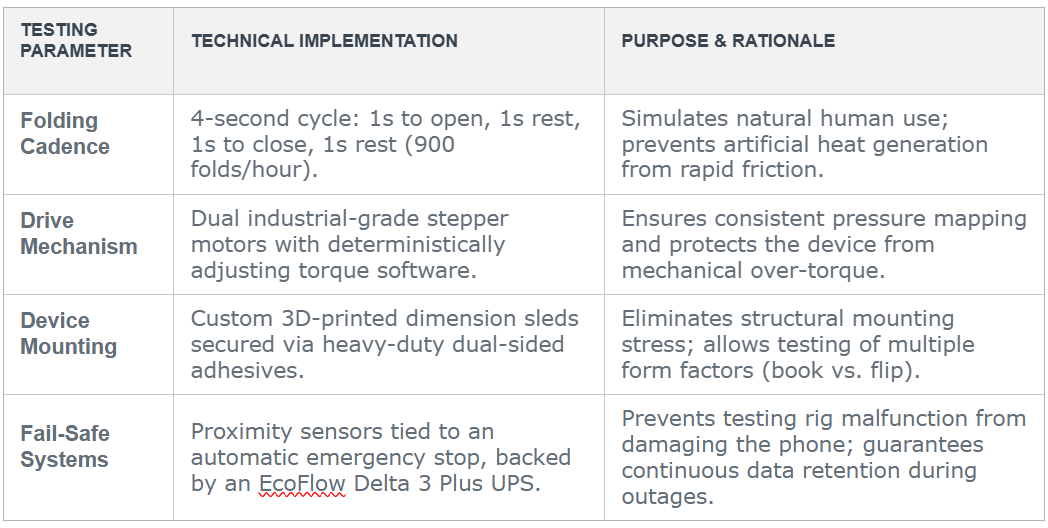
Figure 2. Technical breakdown of the automated stress-testing methodology applied to the iPhone Duo.
Current Status and Outlook
As of the initial testing window, the iPhone Duo has successfully surpassed 20,000 continuous folds without mechanical failure or display degradation. Apple’s entry into the foldable market, arriving seven years after the initial Galaxy Fold, brings massive capital and consumer expectation to the form factor.
The ongoing data generated by the Fold-a-Phone testing rig will establish a crucial, independent baseline to determine if Apple's delayed, highly anticipated hinge engineering can outperform established market leaders in sheer mechanical endurance.