At Google I/O ’26, Google converted their yearly developer conference into an all-encompassing showcase of their AI products and announced a huge flood of new products powered by the Gemini model and added enhancements across their product category, such as enhanced functionality for search and new tools for both search and productivity that give us a sneak preview of how aggressively Google intends to build towards an AI-first ecosystem.
From AI-generated videos and enhanced versions of imagined products, intelligent shopping agents and multi-agents to AI platforms that can operate together to perform complex tasks, Google had an insane amount of content to reveal during a keynote just like a year ago.
By the halfway point of that presentation, it was more like the operating system of the future was being casually unveiled by Google, than an annual tech event.
Check out the highlights from Google I/O’26 below.
Gemini Omni will Produce Videos Using Text, Photos, and Video Clips
The most notable update is the Gemini Omni AI video generator from Google, which is essentially a movie machine. And with only a text prompt, photo or video clip, you can create a professional quality video. According to Google, users will be able to combine many different types of media in their AI-generated video to generate a ULTRA-PRECISE video that contains smoother transitions, higher levels of realism, and better contextual relationships.

Most importantly, Google seems to be positioning Gemini Omni as a creative tool for everyone, especially marketers, educators, and filmmakers.
Gemini 3.5 Flash is a new AI solution from Google which has improved speed and effectiveness.
According to Google, Gemini 3.5 Flash outperforms Gemini 3.1 Pro across multiple benchmarks, running at about 4x the speed and at a much lower cost.
Google claims that Gemini 3.5 Flash was designed for real-time conversation, coding assistance, AI-induced search, productivity tools, and app integration as a part of its goal to increase the accessibility of AI for developers and businesses without increasing computing costs.
Google Search has received the most significant upgrade it has had in a generation.
Google provided a redesigned user interface for Google Search, providing a new AI Search Box. Google also stated that this redesign initiative will provide users with a more conversational, contextual, and task-oriented experience rather than providing users with a listing of links.

According to Google this is the most significant change in Google Search in over 25 years.
As a result of this upgrade to Google Search, users will be able to:
- Ask longer and more natural questions
- Receive AI generated summaries
- Continue the conversation in Google Search
- Get more personalized recommendations
- Complete complex research activities faster.
This development also reinforces Google's plan of providing an entire conversational assistant through Google Search powered by AI technology.
Gemini Spark To Run Your Digital Life
Google also unveiled Gemini Spark, an always-on AI system designed to function more like a personal digital assistant than a traditional chatbot.
According to demonstrations shown during the keynote, Gemini Spark can remain active in the background and assist users throughout the day — even while devices are locked.
The system is expected to help with:
- Scheduling
- Notifications
- Contextual reminders
- Smart recommendations
- Cross-device continuity
- Everyday task management
Google appears focused on making Spark deeply integrated across Android devices, Chrome, Gmail, and Workspace products.
The company says the goal is to create a more proactive AI experience that understands user behavior and anticipates needs more naturally.
Basically, Google wants your AI assistant to become less “ask-and-reply” and more “I already handled it.”
Antigravity 2.0 Introduces Parallel AI Agents
Another major reveal was Antigravity 2.0, a new multitasking AI environment that allows multiple AI agents to run simultaneously on a single screen.
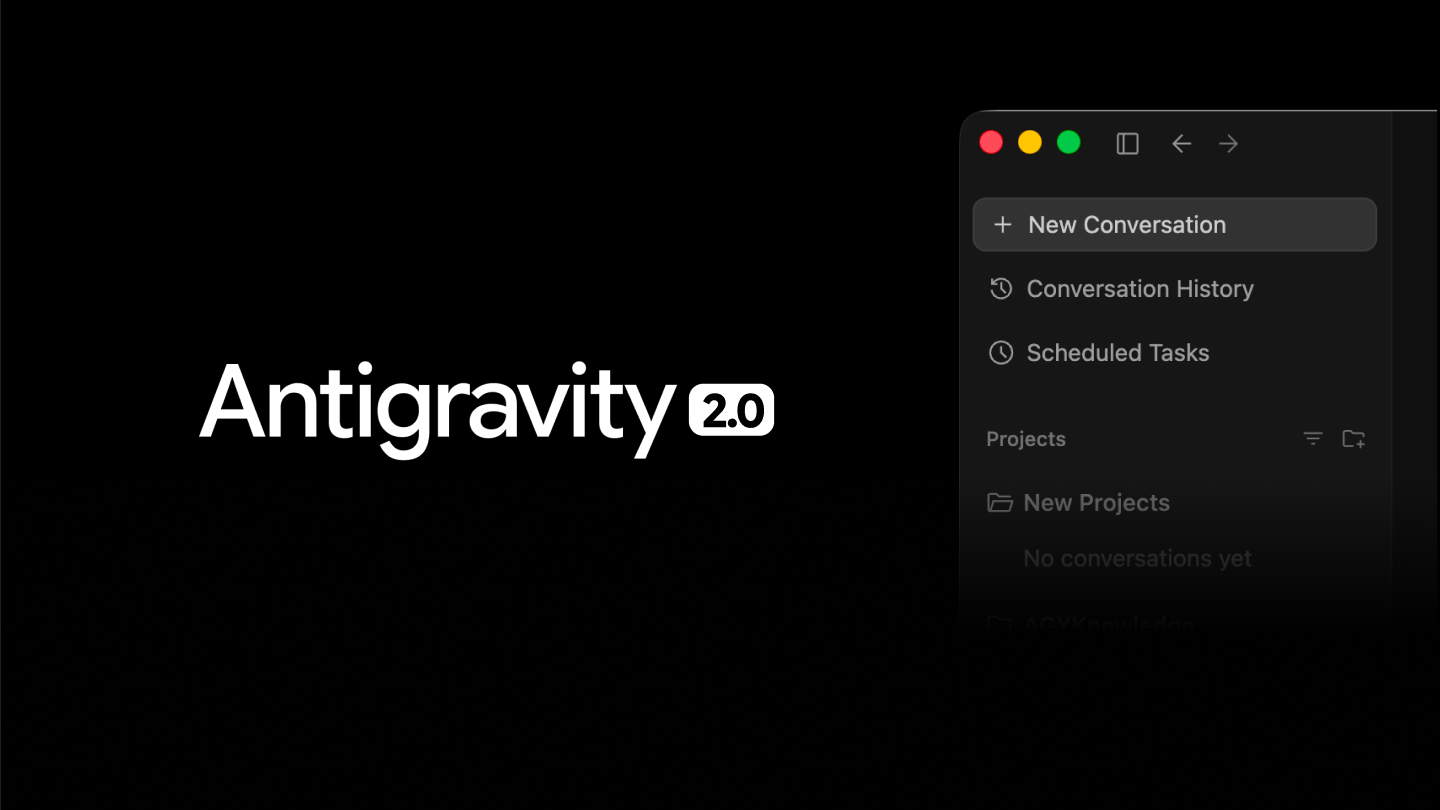
Google demonstrated how users could assign different AI agents to separate tasks such as:
- Research
- Coding
- Content generation
- Planning
- Data analysis
- Online shopping
The system enables users to monitor several AI workflows at once while interacting with them in real time.
The concept reflects the growing trend toward “agentic AI,” where AI systems perform semi-autonomous tasks rather than simply responding to prompts.
AI Agents Can Shop for People Now
Google Showed Off AI Agents Shopping In Action. Google announced you can let AI systems:
- Find Deals on Products
- Monitor Prices to See If They Change
- Add Items to Your Cart
- Automatically Purchase Your Items.
Google also confirmed working with Amazon, Walmart, and Stripe for those features.
Google’s announcement of this feature demonstrates that AI is performing more functions than just providing information to users and is now doing things that interact directly with users through technology utilized to perform acts of commerce.
The New Version Of The Gemini App
Google has released a New Version of the Gemini app with:
- Super-Smooth animations
- Easier navigation
- New Haptic feedback options for interactions.
AI based Features in the App Have Improved, Such As:
- Voice Interaction
- Real-Time Camera Understanding
- Talking to Each Other Using Multiple Methods of Communication
- Recommendations Custom Made to Users.
Google appears to Want the Gemini App to Feel Like One of The Applications/Programs You Use Every Day Instantly Instead of Feeling Like Another Program You Will Have to Open Up To Use.
AI is Finally Being Added to Android 17 Updates
AI also plays a significant role in the announcements for Android 17.
Google Announced Additional Gemini Integrations Within Android, Including:
- More Intelligent Notifications
- AI-Generated Summaries
- Real Time Translations
- Enhanced Multitasking
- More Tailored Options for Users
Google is Shaping Android to Be An AI Centered Operating System.
Developers Received Major AI Tools.
As anticipated, that was another major highlight during the time at The Google I/O Developer event this year.
Google rolled out a series of new APIs, tools for building Gemini-based applications, and upgrades to the underlying infrastructure that would allow developers to build more powerful Gemini-based applications.
Google's central focus has been on:
- Speeding up the process of deploying AI
- Raising the level of multimodal capabilities
- Providing better assistance with coding
- Automating workflows within AI
- Reducing overall operational costs
As competition continues to heat up in the AI market, Google wants developers developing inside of the community rather than competing for business on other platforms.
Google's Vision for AI Has Become More Defined
The main takeaway from the Google I/O Developer conference was that Google does not view AI as a stand-alone product anymore.
Going forward, Google plans on using Gemini as the primary layer that underpins or connects Google Search, Android, Google Workspace, Chrome, shopping, productivity tools, and future hardware experiences together.
Google is developing a truly ambitious and integrated ecosystem of products and services around AI (from AI-generated video content and autonomous agents to conversational search and proactive assistive technologies), rather than a traditional software platform.
Final Conclusion:
The conclusion we've come to is that Google has already begun constructing an AI driven future.
The Google I/O 2026 demonstration captured how quickly the development of AI has transitioned from being an experiment to being a fully integrated digital experience. The technology developed by Google on both desktops, such as their Gemini Omni or AI Driven Search) and mobile platforms (Spark and AI shopping agents) clearly showcase that there is a full ecosystem of integrated devices and services where both hardware and software will utilize and benefit from the AI experience.
Although most of this technology is still being rolled out at this time, the conference clearly established that Google is performing more than just adding AI to the company's future products; Google is completely recreating its entire business model around AI technology.