Anthropic has introduced Claude Opus 4.8 with improved coding, reasoning, and agentic AI capabilities, while also teasing its upcoming Mythos-class AI models designed for advanced cybersecurity and high-intelligence tasks.
Have you heard of Anthropic Claude Opus 4.8? This is the new upgrade to the flagship AI model and the company is testing the more powerful “Mythos-class” generation of AI systems. In this model you will experience better and stronger coding abilities and improved reasoning to advanced cybersecurity-focused models. In this article you will know everything about Claude Opus 4.8 and what comes next.
Claude Opus 4.8: What’s New?
The recent model of Anthropic called Claude Opus 4.8 has come up with the best in class improvements in agentic coding, reasoning, and knowledge work. In this AI model upgrade the company has introduced new features aimed at giving users greater control along with the feature to manage developers in larger and complex workflows.
Code reliability is one of the most talked about improvements, according to Anthropic. AI models can sometimes provide answers with high confidence even when they are incorrect. According to the claims by Anthropic, Opus 4.8 has significant training to identify mistakes and flag them while responding to the query.
“One of the most prominent improvements in Opus 4.8 is its honesty,” the company said in a blog post.
In this model it is trained to take over more dependable tasks for coding and is better at spotting flaws in code and less likely to ignore problems. As per the testing report which is done internally it shows model capability around four times less likely than Opus 4.7 to leave coding issues unmentioned.
Beyond coding, Anthropic claims Opus 4.8 delivers better performance across reasoning, agentic capabilities, and practical knowledge-work benchmarks.
New Features Introduced With Opus 4.8
The all new “Effort Control” setting on the Anthropic has been introduced by Claude.ai and Cowork that gives flexibility to the users to choose the timing that Claude should get in order to make the solution of the dedicated task. Higher effort levels can generate more detailed and accurate responses, while lower settings prioritise faster replies and reduced resource usage.
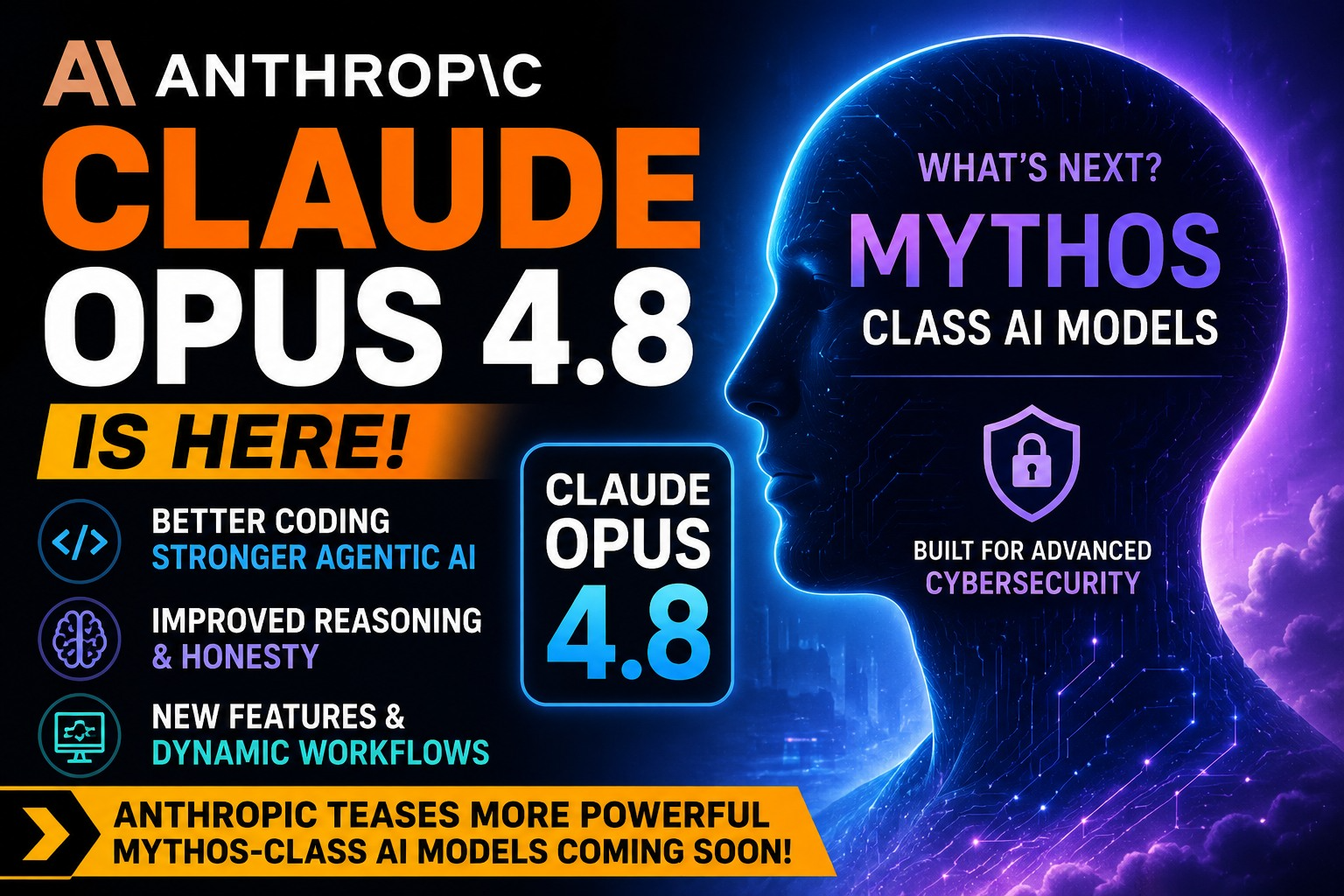
Along with effort control the company has also rolled out Dynamic Workflows for Claude Code. Anthropic explains that Claude can now plan tasks and deploy hundreds of parallel subagents. These agents can work for longer durations with Opus 4.8 and verify outputs before presenting results back to the user.
Availability and Pricing of Claude Opus 4.8
Claude Opus 4.8 is available globally starting today. Pricing remains unchanged from Opus 4.7, with input tokens priced at $5 per million and output tokens at $25 per million. Developers can access the model through the Claude API.
Anthropic’s Bigger Bet: Mythos-Class AI Models
While Claude Opus 4.8 is Anthropic’s latest public release, the company is already preparing for the next leap in AI capability.
Anthropic revealed that, under Project Glasswing, a limited number of organisations are currently testing “Claude Mythos Preview” for cybersecurity-related work. The company says these Mythos-class models are significantly more capable than Opus-level systems and therefore require stronger cybersecurity safeguards before a wider rollout.
“As part of Project Glasswing, a small number of organisations are currently using Claude Mythos Preview for cybersecurity work. Models of this capability level require stronger cyber safeguards before they can be generally released,” Anthropic said.
The company added that it is making rapid progress on these safeguards and expects Mythos-class AI models to become available to customers in the coming weeks.