As digital peer-to-peer commerce matures, Meta is fundamentally restructuring how individuals buy and sell goods online. The company recently announced “Seller,” a standalone mobile application dedicated entirely to Facebook Marketplace vendors, paired with a universal, free identity verification system. These updates aim to professionalize the selling experience, separate commercial transactions from personal social networking, and leverage artificial intelligence to streamline operations. For consumers, the broad rollout of human-verification checkmarks signals an aggressive push to filter out automated bot accounts and establish a more trustworthy digital economy.
Why Facebook Marketplace’s New Changes Matter
Online peer-to-peer marketplaces have completely altered local commerce, transforming how neighborhoods exchange goods and services. At the center of this shift is Facebook Marketplace, a platform that has organically grown into one of Meta’s most resilient and frequently used utilities. Recognizing the distinct needs of high-volume vendors and everyday buyers, Meta is now unbundling its commerce infrastructure. By introducing the standalone Seller app and implementing a widespread identity verification protocol, the company is attempting to upgrade its marketplace from a casual digital yard sale into a highly structured, secure, and AI-enhanced retail ecosystem.
Why Meta Is Expanding Marketplace
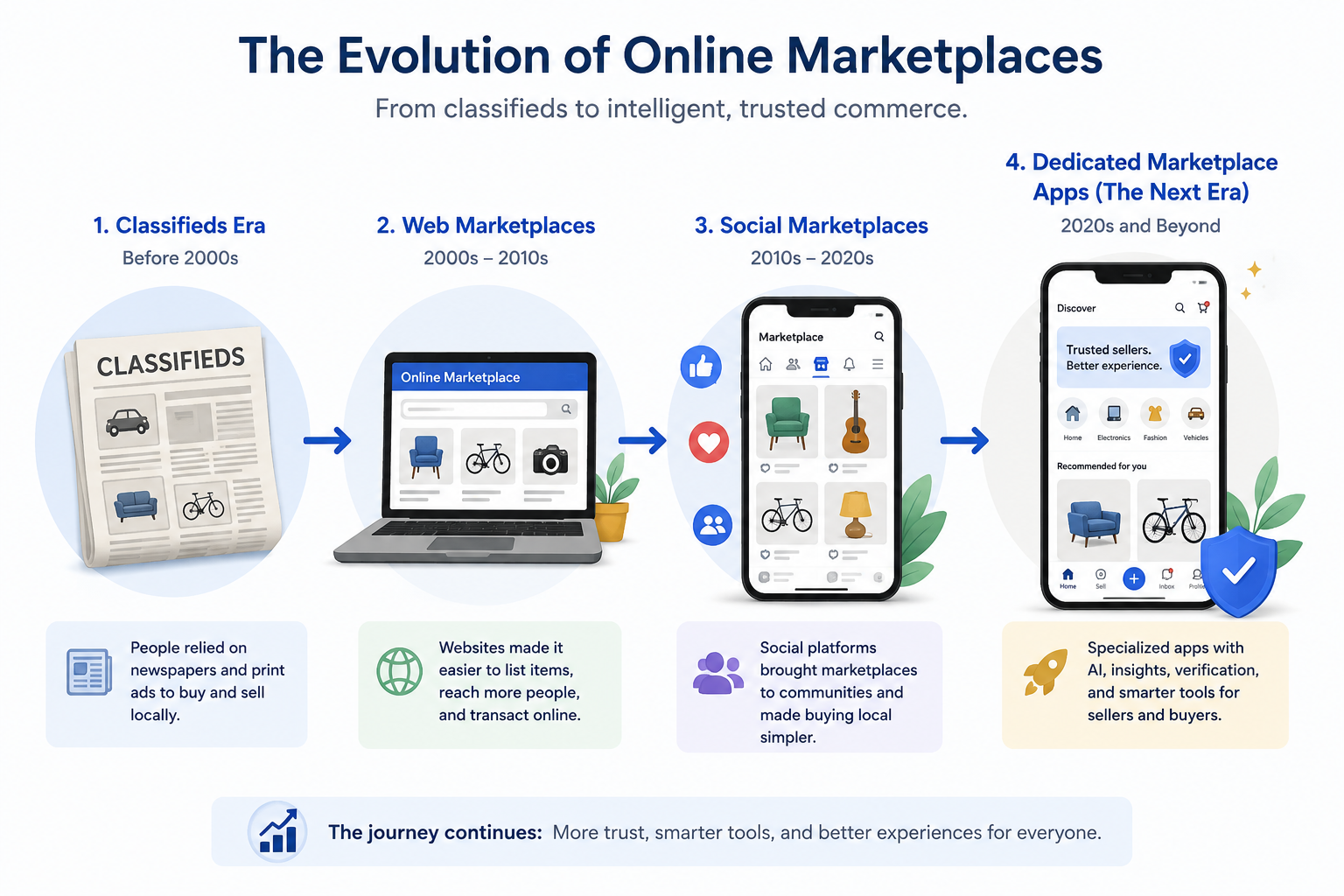
Facebook Marketplace evolved from a simple tab within a broader social media interface into a massive economic engine. However, as the platform matured, it faced growing competition from specialized local commerce platforms like OfferUp and digital storefronts like eBay.
To remain competitive, Meta is deploying a dedicated app designed to improve the user experience for vendors. The Seller app targets the specific logistical needs of online merchants, offering a distinct environment away from the standard Facebook feed. This move is part of a broader corporate strategy involving the unbundling of services to reduce friction. Meta is experimenting with extracting its most vital community features—such as spinning Groups off into a separate app called “Forum”—to allow the primary Facebook application to pivot heavily toward algorithmic, video-first content delivery.
Understanding the New Verification System
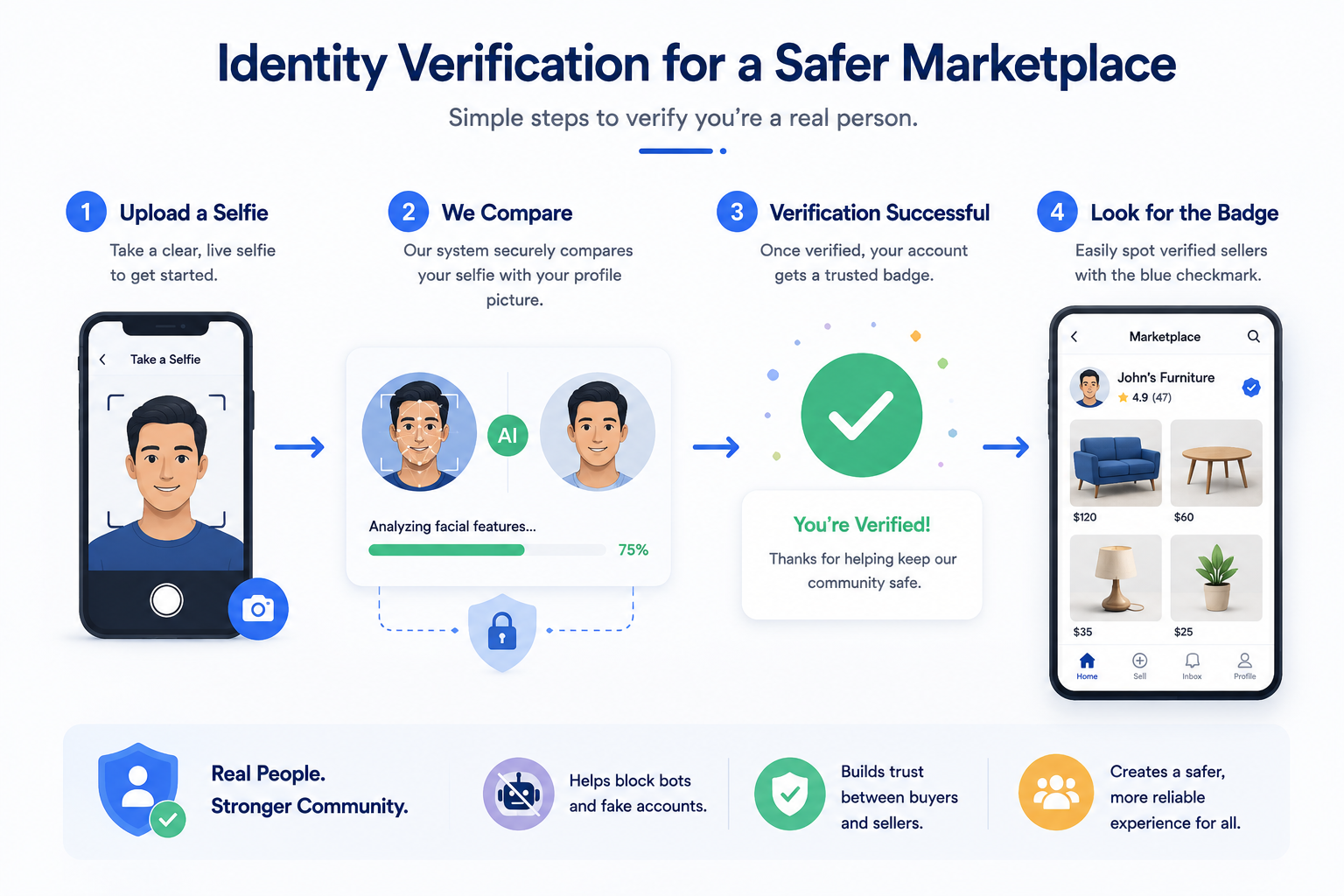
A significant challenge in any digital marketplace is the proliferation of fake accounts. To combat this, Meta is introducing a universal verification system. Unlike premium subscription models, this new verification checkmark is free and available to all users.
The process relies on basic biometric matching: users upload a live selfie, which the system compares against their public profile picture. If the visual data aligns, the account receives a verification badge. This protocol serves a highly specific purpose: confirming human identity. While it effectively restricts automated AI bots from flooding the platform with fraudulent listings, it does not evaluate moral character. A verified badge indicates that a real person operates the account, but users must still exercise standard precautions against human-operated scams.
How the New Marketplace App Changes the Experience
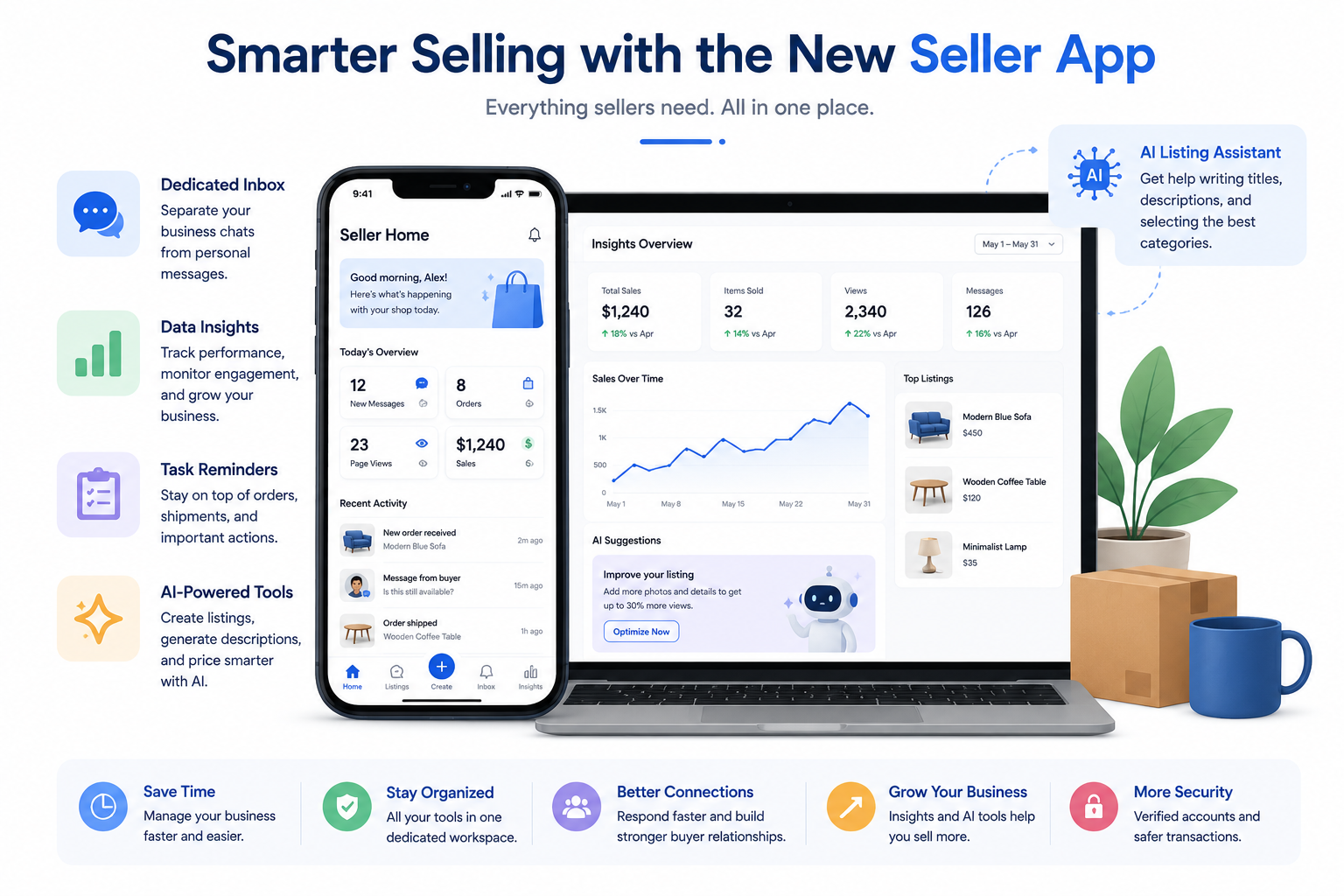
The Seller app acts as a lightweight customer relationship management (CRM) tool for vendors. Because downloading the app remains optional—users can still sell items through the main Facebook app—it specifically caters to those who want a more focused workflow.
The standalone environment improves product discovery and store management by offering a centralized homepage that tracks sales activity and issues task reminders. Crucially, it separates commerce-related direct messages from personal conversations with friends and family in Messenger. For vendors aiming to scale a reselling hobby into a legitimate small business, the app also introduces a dedicated data insights tab to track performance metrics.
| Feature | Integrated Facebook Marketplace | Standalone “Seller” App |
| Primary Audience | Casual buyers and occasional sellers | High-volume sellers and small businesses |
| Messaging | Mixed with personal Messenger chats | Isolated commercespecific inbox |
| Analytics | Basic listing views | Dedicated data insights tab |
| Workflow | Standard social feed interface | Task reminders and centralized sales overview |
| AI Integration | Basic search capabilities | Advanced AI listing generation and management |
Real-World Impact
These architectural updates will ripple across different user segments in unique ways:
• Individual buyers: Consumers will benefit from the visual reassurance of verification checkmarks, making it easier to filter out obvious bot accounts when searching for items.
• Casual sellers: Those looking to clear out a garage can utilize AI tools to automatically write listings, removing the friction of manual data entry.
• Small businesses and Professional resellers: The dedicated insights tab and task reminders provide professional-grade tools to track inventory, measure engagement, and manage customer inquiries efficiently.
• Local online communities: As commerce and community groups are potentially unbundled from the main social feed, users may need to navigate multiple applications to engage in their local digital neighborhoods.
The Bigger Industry Picture
The digital marketplace sector is currently defined by a heightened demand for security. The increasing importance of trust in online environments is forcing platforms to elevate their identity verification standards. As competitors refine their own security protocols, Meta’s integration of selfie-matching reflects a broader industry trend toward mandatory human-verification in digital spaces. Furthermore, the unbundling of social commerce into standalone applications suggests that the future of peer-to-peer retail will rely on specialized, intent-driven software rather than all-in-one social media monoliths.
Advantages of the New Marketplace Experience
• Universal verification strengthens fraud prevention by creating a significant barrier against automated bot networks.
• Visible verification checkmarks increase buyer confidence by providing a basic level of identity assurance.
• Verified profiles improve seller credibility, helping legitimate merchants stand out from fake accounts.
• Separate business messaging keeps seller conversations organized and reduces missed inquiries and communication clutter.
• AI-assisted listing generation improves product discovery by creating more accurate descriptions and tags for search.
Current Challenges
• Privacy concerns may arise as users could be hesitant to provide biometric selfie data to a major technology company.
• Additional onboarding requirements, such as downloading a separate app, could create friction and slow initial adoption.
• Verification cannot eliminate fake listings or scams, as verified accounts can still be operated by dishonest individuals.
• While professional sellers may welcome the dedicated Seller app, casual users may find managing multiple Meta applications inconvenient.
• Balancing security with convenience remains challenging, as additional verification and listing steps can make local transactions less spontaneous.
Why This Matters for the Future of Social Commerce
Trust is rapidly becoming the ultimate competitive advantage in the digital economy. If consumers cannot trust the person on the other side of a transaction, the underlying software is irrelevant. By tying marketplace activity to verified human identity, Meta is attempting to reshape the baseline expectations of peer-to-peer marketplaces.
Simultaneously, the pivot toward standalone applications indicates that social commerce has outgrown the traditional social media feed. The relationship between security, convenience, and digital commerce requires specialized infrastructure. Dedicated apps allow platforms to implement robust financial and analytical tools without bloating the primary social networking experience.
What’s Next
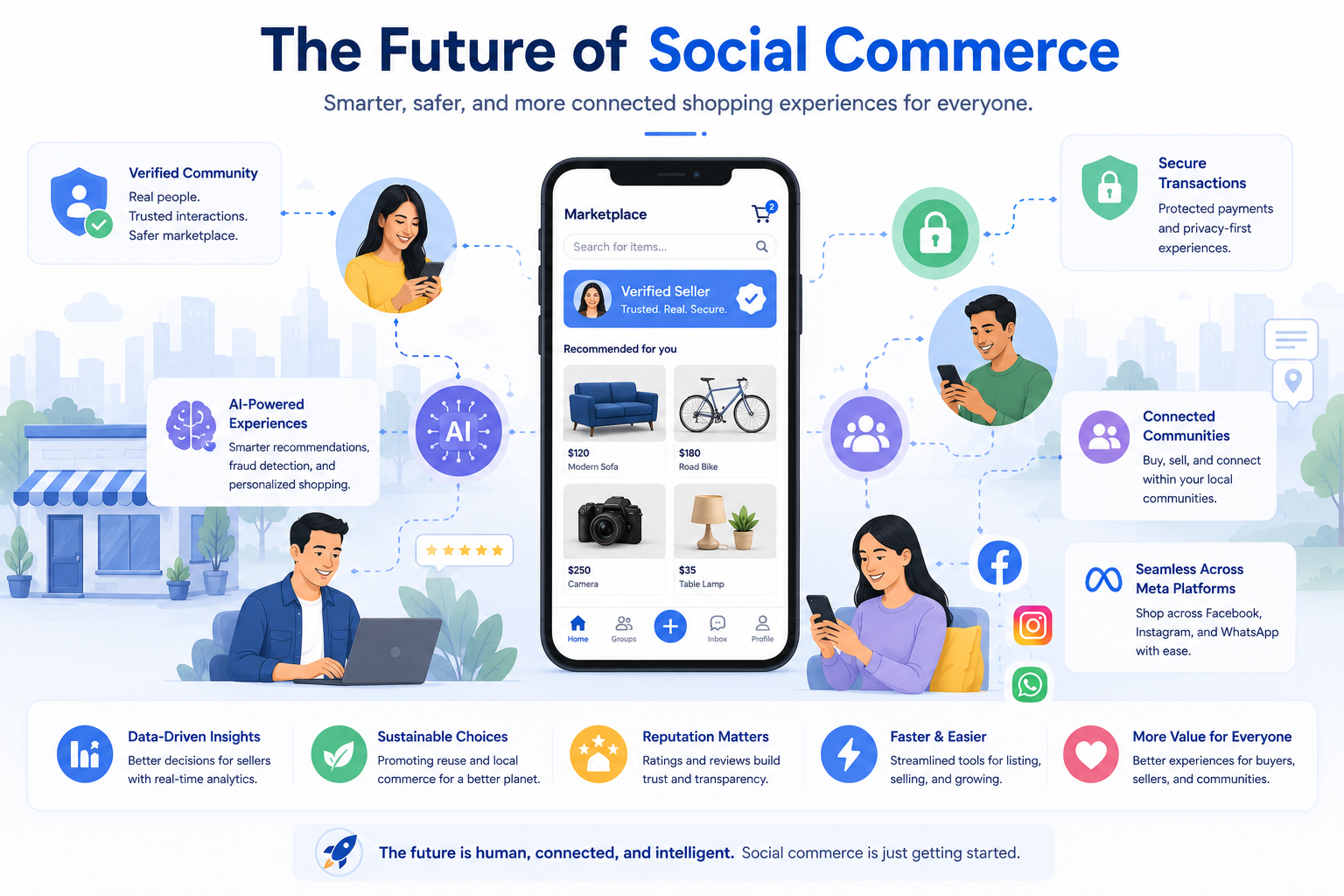
Looking ahead, the evolution of the Seller app will likely depend heavily on artificial intelligence. Based on current industry trajectories, users can expect future Marketplace features to include AI-powered fraud detection that flags suspicious pricing or communication patterns in real-time. Enhanced seller reputation systems could eventually integrate with verified accounts to provide a holistic trust score. Ultimately, deeper integration across Meta platforms could allow professional sellers to easily push their verified listings from the Seller app directly into Instagram storefronts or WhatsApp business catalogs, redefining local commerce on a global scale.
Key Takeaways
Meta’s decision to launch the standalone Seller app and roll out universal verification checkmarks marks a maturing of its commerce ecosystem. By offering professional-grade management tools and isolating business communications, the company is actively supporting its most lucrative user base: high-volume merchants. While the verification process is a welcome defense against automated bots, it is not a cure-all for digital fraud. Buyers and sellers should expect a cleaner, more organized retail experience moving forward, provided they are willing to navigate a slightly more fragmented app ecosystem and remain vigilant against human-operated scams.
Expert Insights & FAQs
Why is Facebook launching a separate Marketplace app?
Meta is launching the Seller app to provide high-volume vendors with a dedicated workspace, separating business analytics, task reminders, and customer communications from the personal social media feed.
How does Marketplace verification work?
Users upload a live selfie, which the platform’s system compares against their public profile picture. If the images match, the account receives a free verification checkmark indicating it is operated by a human.
Will verification become mandatory for everyone?
Currently, the verification system is positioned as an accessible tool for establishing trust, though Meta has not stated that it will forcefully restrict unverified users from browsing or messaging.
Does verification eliminate scams completely?
No. The verification checkmark only confirms that a real person is operating the account rather than an automated bot. It does not guarantee that the human user is honest or operating with good intentions.
How will these changes affect buyers and sellers?
Sellers gain access to AI tools for writing listings and a separate app for tracking analytics. Buyers benefit from visual checkmarks that help filter out automated fake profiles, resulting in a generally more reliable browsing experience.