What is an AI Agent?
Test
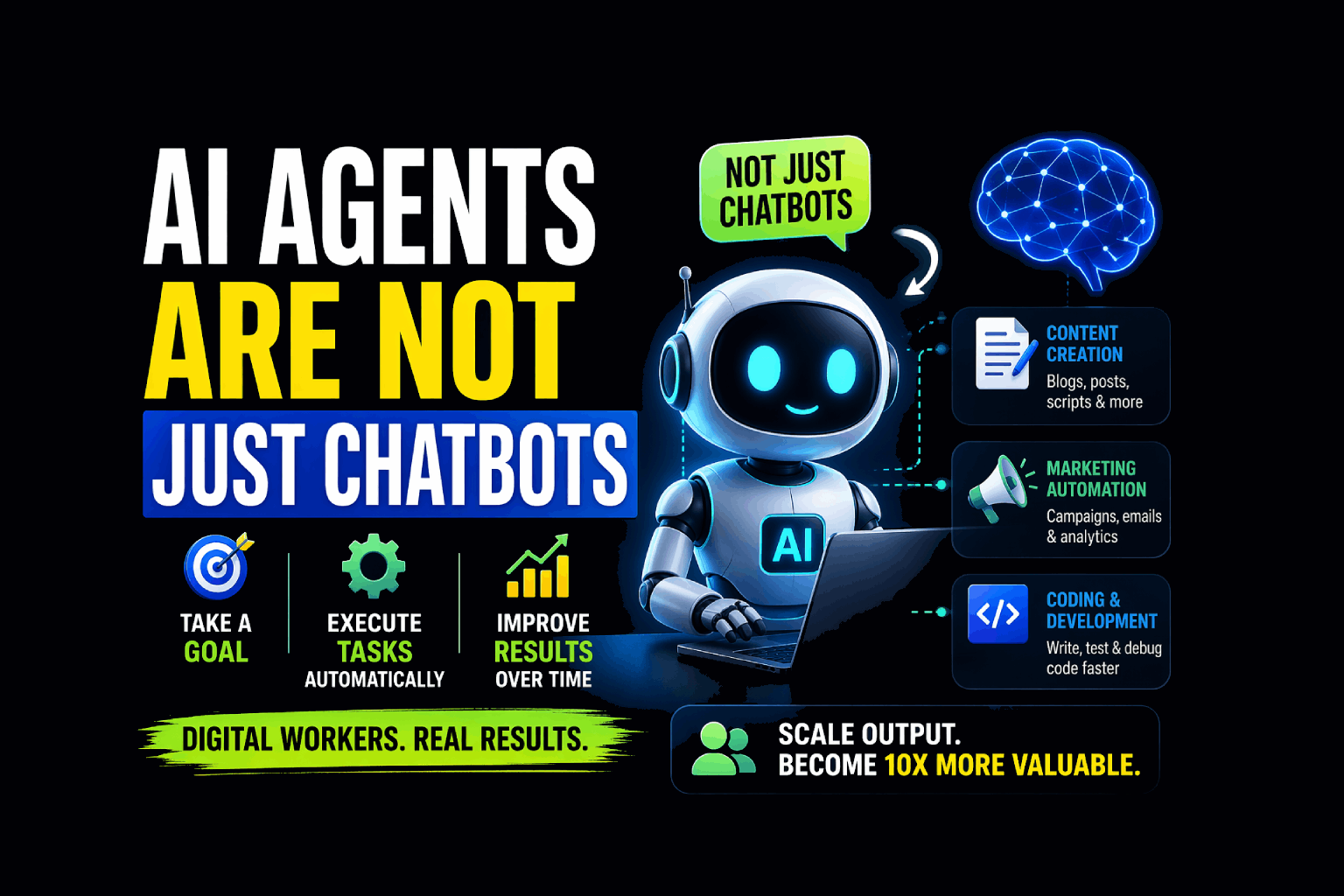
An AI agent is an intelligent software system that can think, decide, and act independently to complete tasks. It uses a large language model (LLM) as its core reasoning engine but goes beyond simple responses by interacting with tools, APIs, and external systems.
Unlike traditional chat-based AI, agents actively work toward goals—making them powerful for automation, data analysis, and software development.
From Passive AI to Autonomous Systems
Traditional AI systems are reactive—you ask a question, and they respond. They don’t take initiative or act beyond conversation.
AI agents, however, operate in continuous loops. They observe, think, plan, and act. This allows them to execute tasks step-by-step and adapt dynamically to changes.
Core Architecture of AI Agents
1. The Reasoning Engine (The Brain)
At the center is the language model (GPT, Claude, Llama). It analyzes inputs, makes decisions, and determines the next action.
2. The Planning Module
Agents break complex problems into smaller tasks and solve them step-by-step. They can rethink and adjust if something fails.
3. Memory Systems
- Short-term memory: Keeps track of current interactions.
- Long-term memory: Stores past data using vector databases for future retrieval.
4. Tools and Actions
Tools allow agents to interact with the real world—calling APIs, running code, or querying databases.
AI Agents vs Traditional Automation
Traditional automation relies on strict rules and fails when conditions change. AI agents are adaptive and capable of handling unstructured data and unexpected scenarios.
- Automation: Rule-based, rigid
- AI Agents: Intelligent, flexible, self-correcting
Key Concepts Behind Agentic AI
The ReAct Framework
AI agents use a loop of reasoning and acting:
- Thought: Decide what to do
- Action: Execute a step
- Observation: Analyze results
This loop continues until the task is completed.
Function Calling and Tool Use
Developers define tools using structured schemas. The AI decides which function to call, and the system executes it.
Multi-Agent Systems
Complex workflows can use multiple agents working together:
- Product Manager Agent – defines requirements
- Developer Agent – writes code
- QA Agent – tests output
Why AI Agents Matter
AI agents represent a shift from passive tools to active systems that can execute tasks independently.
For engineers and businesses, this unlocks automation at a whole new level—where AI doesn’t just assist, but actually works.